



-
10 Saturation
-
7 Aftertaste
-
9 Aroma
-
9 Effect
-
8 Balance
-
10 Body
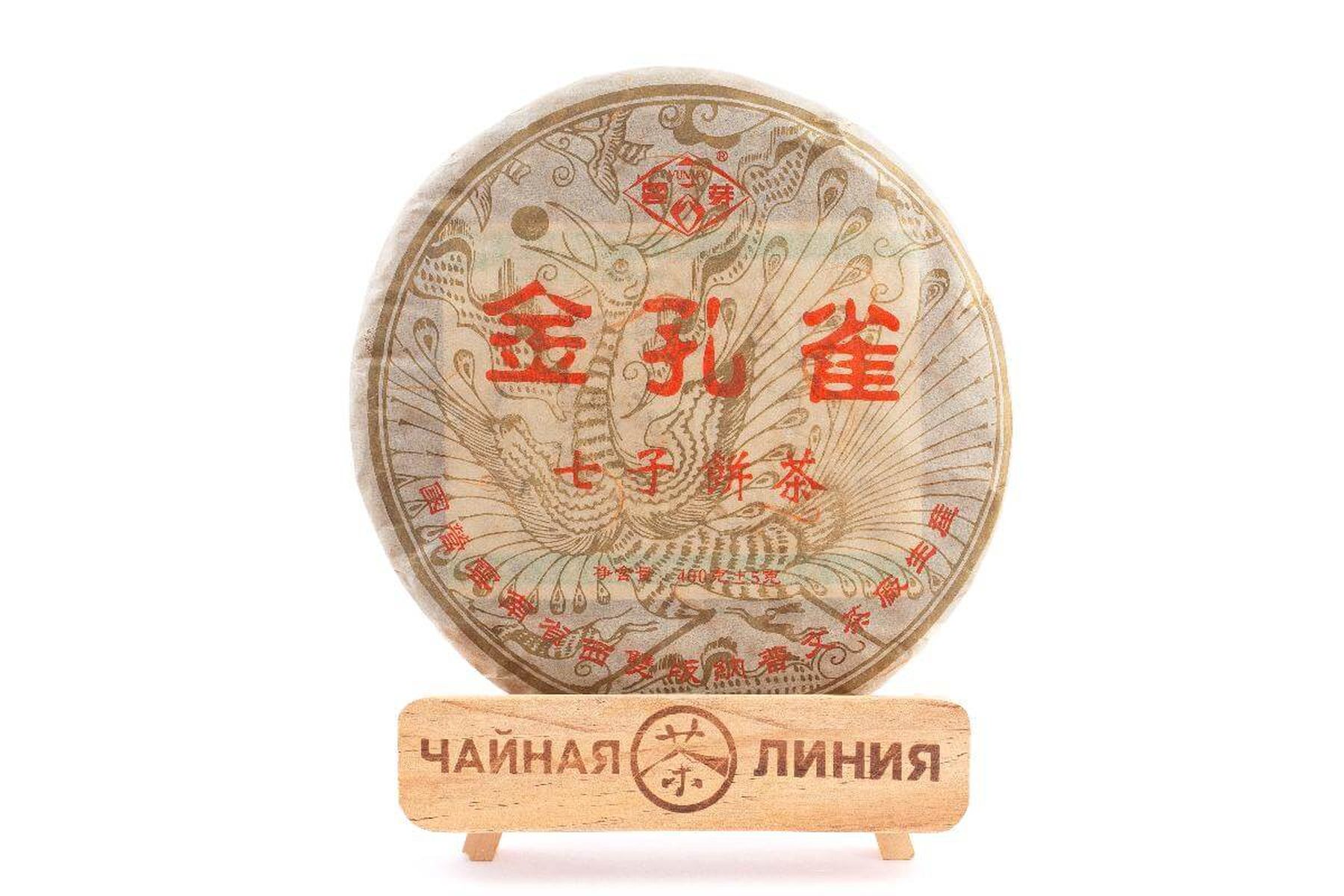
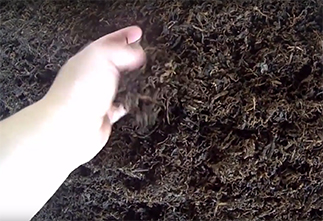
The aroma of dry tea leaves when warmed by breath is subtle, soft with a note of good aged wine.
After washing, shades of old books on a slightly dusty shelf, a leather briefcase, and sweet marshmallows on skewers can be read.
The taste of brewed tea is fresh, silky and sweetish. You can feel the almond trail, woody-chocolate profile. Throughout the tea drinking, this puer retains its taste profile well, a light play of flavors appears: from sweetish shades to light bitterness.
The infusion is very transparent, pleasant cognac color, leaves a long aftertaste, slightly astringent with a light sweetish shade. With age, the number of steepings has increased, 10 g of tea can be steeped in a teapot made of Yixing clay with a volume of 150-200 ml more than 8 times.
Aged shu puer 2003 "Golden Peacock" brand "Puwen" has a strong tea effect. This is a meditative state, a feeling of calm and order in thoughts, the tea acts softly, by the end of tea drinking it tones, gives energy, wisdom and a good mood.
"Golden Peacock" of the "Puwen" brand is a well-aged puer of high quality, for attentive, discerning tea drinking, in good company on some special occasion.
|
Name in Chinese
|
金孔雀 |
|
Pinyin
|
jīn kǒngquè |
|
Translation
|
Golden Peacock |
|
Country
|
China |
|
Provinces
|
Yunnan (云南) |
|
Manufacturer
|
Пувэнь (普文) |
|
Date of raw material production
|
2003 |
|
Year of pressing
|
2003 |
|
Pressing form
|
Bing Cha (Cake Tea) |
|
Declared weight, g
|
400 |
- Reviews
- Vkontakte
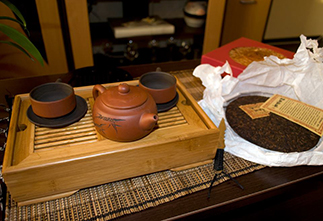
The question often arises: how to brew puerh correctly? Sometimes the phrase "to get high" is added to it. Moreover, everyone has their own understanding of this phrase. Some mean vigor, and some - intoxication. So how to brew puerh tea correctly? Let's consider several options.
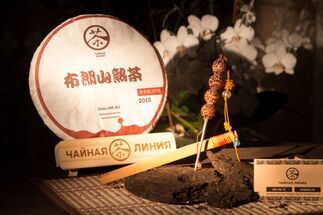
The tea ceremony occupies a special place in the centuries-old Eastern tradition. And although the essence of this phenomenon remains constant, the nature and external manifestations of the tea ceremony in different nations have their own national characteristics. In each Chinese province, the tea ceremony and the tea used in it are varied: for example, residents of the southern provinces prefer green tea, and residents of the northern provinces - red tea, in Fujian province they more often use Oolong tea, and in Yunnan province Puer tea is widely known.


