



Напиток Императоров: Пуэр
The tea ceremony holds a special place in the centuries-old Eastern tradition. While its essence remains constant, the nature and external manifestations of the tea ceremony vary among different cultures. Each Chinese province has its own distinct tea ceremony and tea used: for example, residents of the southern provinces prefer green tea, while those in the northern provinces prefer red tea. Oolong tea is more commonly used in Fujian Province, while Pu'er tea is widely known in Yunnan Province.
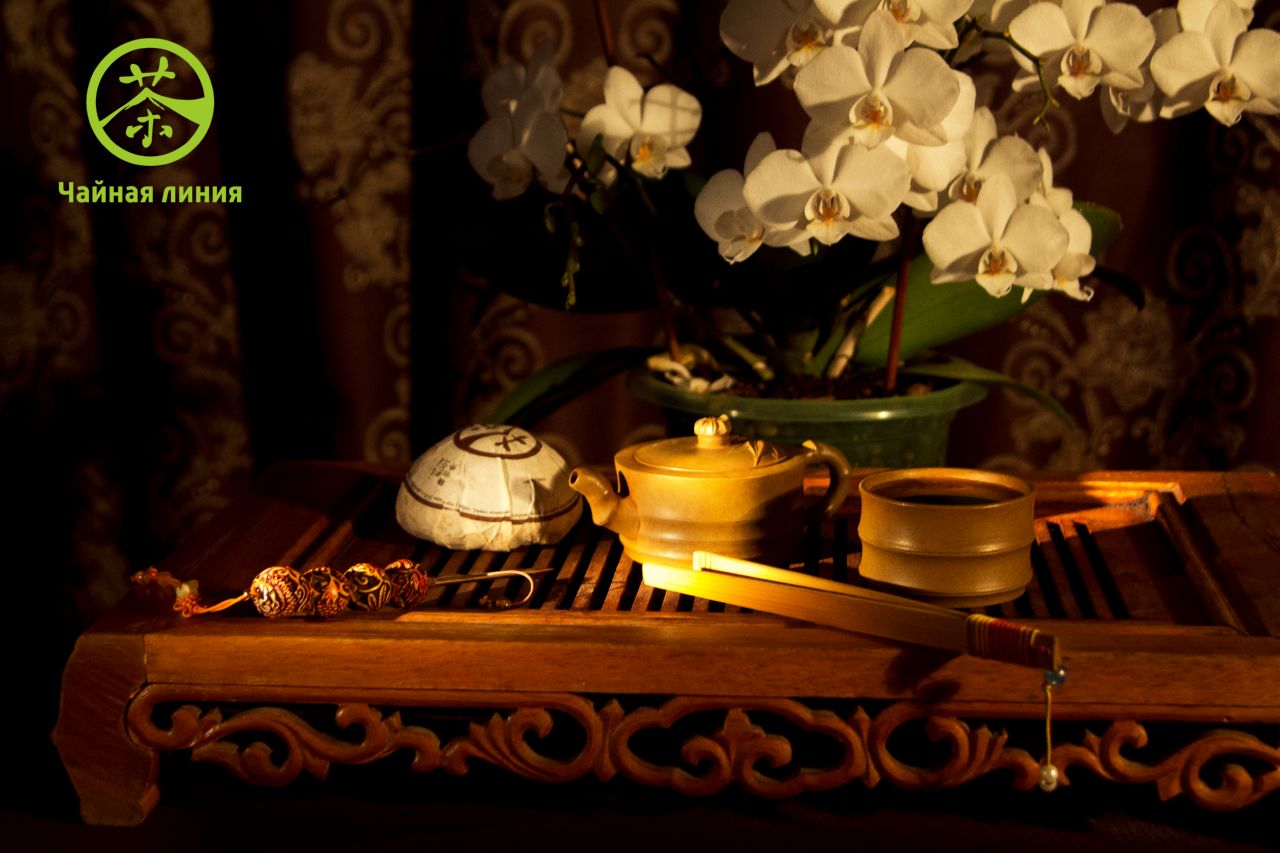
According to one theory, this variety owes its distinctive flavor to the multi-day journeys it took to transport it from China. During these journeys in the highlands, the tea was exposed to extreme temperature fluctuations. In the morning after a cold night, condensation would form on the tea, permeating all the tea leaves, and during the day, the sun would dry them completely. This exposure led to fermentation, which gave pu-erh tea its characteristic flavor and aroma, as well as certain properties.
History of tea
Chinese Pu'er is the most ancient tea, cultivated for over three millennia. A Pu'er tree exactly this old was recently discovered in Yunnan. Moreover, its leaves are harvested and sold at auction, with regular celebrations held in its honor. Throughout its history, tea has always been particularly popular, being the most traded and expensive commodity on commodity exchanges. Ordinary Chinese also often paid at the market not with cash, but with pressed cakes until the 19th century. So where did this amazing drink come from?
The name has an interesting etymology, as it derives from the city of Pu'er, located in southwest China. Nearby, in Shimao and Xishuangbanna, Pu'er is still produced using ancient techniques, incorporating production secrets that are closely guarded by the Chinese people. It's no coincidence that, long ago, foreigners could be killed on tea plantations if they were suspected of being potential espionage agents.
It's known that when Pu'er tea was first introduced, it was transported exclusively by horse, requiring compact packaging. Therefore, the tea was compressed into cakes, wrapped in special paper, and tied into stacks. Each stack (of seven cakes) was then wrapped in a bamboo casing (hence the name "Seven Brothers Cake"). The tea was transported for a very long time, through the high-humidity tropics, allowing natural fermentation to occur during this period. Consequently, the tea was shipped raw and arrived dry.
Shu and Shen Puer
The two main types are Sheng Pu'er (raw) and Shu Pu'er (fermented). In our country, unqualified tea merchants often mislead customers by telling them that Sheng is pressed tea and Shu is loose tea. However, the difference between these two types of tea is actually much more profound.
Raw Pu'er (Sheng Pu'er) is fresh tea leaves that have been picked, dried, and pressed into a variety of shapes. They can be shaped like a cake or a bowl, a brick or a square, a mushroom or a pumpkin. What's important is that it's a living tea. During storage, it undergoes a slow fermentation, allowing the tea owner to control its flavor, which changes over time. It's believed that Sheng Pu'er can only be consumed two to three years after picking, but many tea connoisseurs believe that authentic Sheng Pu'er tea only becomes available after 20 years of aging. During this time, the roughness and bitterness of the original tea leaves and the moist aftertaste fade, and the tea acquires its distinctive aroma and flavor. The tea's color also changes over the years, from light green to almost black.
Today, you can try and appreciate the flavor of Sheng Pu'er tea of various ages or purchase tea for your own collection. In our stores, tea masters will share the secrets of preparing this divine beverage. In a calm and leisurely tea tasting, you'll learn about the tea ceremony, the brewing methods of true Pu'er, and its beneficial properties. Like other elite varieties, Chinese Sheng Pu'er not only has a magnificent aroma and flavor but also promotes rejuvenation. In addition to its invigorating effect, which helps boost productivity, it:
- improves digestion,
- removes toxins,
- lowers the level of bad cholesterol in the blood.

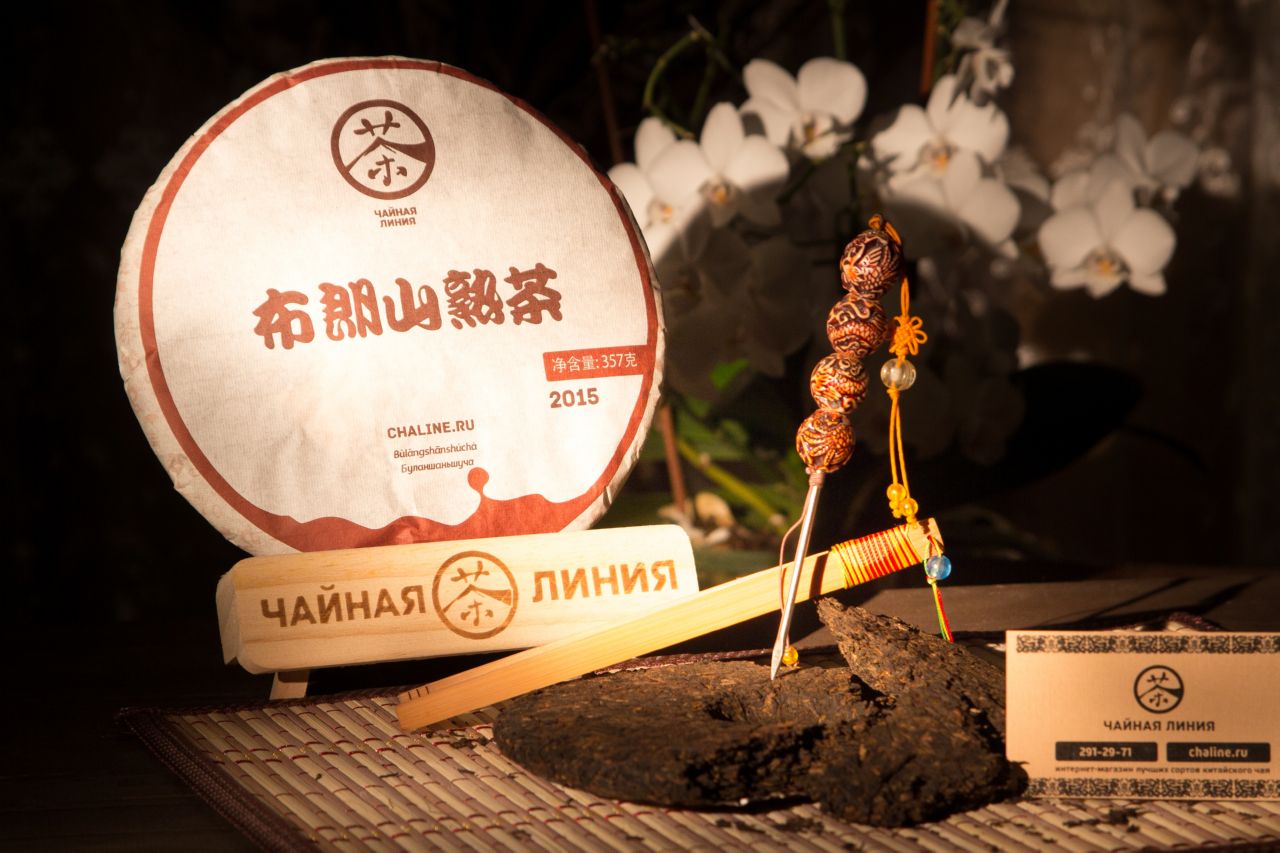
Shu Pu'er is the same Pu'er, but "aged." While tea was previously aged naturally, this type is now produced using an accelerated fermentation technology developed in the 1970s.
It's especially important to note that although the fermentation technology is a recent development, it's simple and natural, using no modern chemicals. It involves simply gathering tea leaves into piles, actively watering them, and storing them. During the "ripening" process, various bacteria bring Shu Pu'er tea to the desired condition.
The resulting fermented tea produces a soft, sweet flavor rich in a variety of nuances. A discerning gourmet will find hints of nut and caramel, or chocolate and molasses. While the tea itself is considered dark, Shu Pu'er tea can vary greatly in color, from reddish-brown to almost black.
The aroma and flavor of Shu Pu'er tea are, without exaggeration, the aroma and flavor of Chinese culture. It's worth remembering that the East abhors fuss, so it's impossible to truly enjoy this elite Chinese tea on the first try. Try this tea again and again, and each time you'll experience new notes of its magnificent flavor.
Besides providing pleasure, Shu Pu-erh will help you maintain youth and longevity. The list of its beneficial effects on the human body is too extensive to list in full. But undoubtedly, the most important benefits of this tea are:
- increase in low pressure,
- lowering blood cholesterol levels,
- preventing the occurrence of malignant tumors.
These are the illnesses that are a hallmark of our modern world and, unfortunately, can be a companion for most of us. Shu Pu-erh tea is a wonderful natural healer that cares for our health every day.
A few more interesting differences
These two varieties have different colors:
- Sheng Puer is light, with leaves that have either a greenish tint or a pleasant brown-green color.
- Accordingly, Shu Puer is a darker shade – brown, close to black.
This also applies to the infusion of already brewed tea, as Sheng pu'er produces a light, almost transparent infusion, while Shu pu'er produces a thick, dark infusion that doesn't allow a drop of light to pass through. Many Russian Shu pu'er lovers compare its infusion to oil, due to its dense, dark color.
The tastes of the described species also differ significantly:
1. Sheng Pu'er tea has a pleasantly sour and slightly sweet aftertaste, sometimes with a distinct hint of prune. The aromas can be varied: raisins, dates, smoke, woodsy…
2. Shu Pu-erh has a softer, heavier taste without the sourness, bitterness, and sweetness, but with a pleasant “chocolateiness” and “nuttiness.”
Features of taste and aroma
The aroma and richness of the drink are directly dependent on the quality of the tea leaves used for brewing, as well as the preparation stages. The ingredients give the tea a multifaceted flavor, with notes of nut, wood, and prune. Pu-erh leaves a sweet-tart aftertaste with a slight bitterness.
To fully appreciate the natural flavor and fully enjoy the tea, avoid adding any sweeteners. We've already written about how to brew pu-erh tea . Afterward, pour the tea into bowls and sip it. When drinking tea, keep a few things in mind:
1. It is not recommended to drink tea in large quantities.
2. Due to its tonic effect, it is best to drink the drink before lunch; in the evening it can cause insomnia.
3. Sugar spoils its natural taste.
Some people claim that drinking the tea causes a euphoric sensation, similar to intoxication. Pu-erh tea is not a narcotic, so the strange sensations experienced after drinking it cannot be considered intoxication. The tea relaxes muscles, invigorates the body, clears the mind, and creates a feeling of lightness. This is due to the presence of certain substances:
- Theine. Stimulates intense brain activity.
- Theophylline has a positive effect on the central nervous system.
- L-theanine. Promotes proper communication between brain cells.
Effect of consumption and beneficial properties
Tea is a traditional drink in many countries. In China, it is particularly prized for its unique flavor and rich aroma, while in Asia, it is sought after as a healing beverage with a range of beneficial properties. Daily consumption of Pu-erh tea strengthens the immune system and reduces the risk of many diseases.
Here are some objective advantages and obvious benefits of this truly magical drink:
1. Improves metabolism, having a beneficial effect on the functioning of the gallbladder.
2. Cleanses the liver.
3. Relieves the feeling of heaviness in the stomach, promotes easier digestion of food, and normalizes the functioning of the entire digestive system.
4. Gives a boost of energy.
5. Quickly and effectively removes hangover syndrome.
6. Used as a natural rejuvenating agent.
7. Reduces pain in gastritis and ulcers.
8. Reduces the factors that contribute to the development of heart attack and stroke.
9. Prevents the development of cancer. Pectin, found in the drink, inhibits the function of a protein that promotes the development of cancer cells.
Tea leaves have an impressive chemical composition, containing minerals and vitamins essential for the proper functioning of internal systems, proteins, sugars, and amino acids. Aromatic substances strengthen the nervous system. Tea is beneficial for those with low blood pressure, as it can easily be raised by steeping strong tea. Theine, the main component of tea leaves, dilates blood vessels, improving oxygen circulation.
Interesting facts
- The Chinese say that in ancient times, when a child was born, parents would pawn a pu'er tea cake this year, according to an old tradition. This was done so that when the child grew up and wanted to start their own family, they could sell the old tea and pay for the wedding. To this day, many Chinese prefer to invest their money in pu'er tea, the price of which steadily increases each year, rather than in banks.
- Many people think that this tea is buried in the ground “for storage”, but this is not true.
- In Yunnan, there's a thriving institute where students study Pu'erh tea production technology in detail. Without a diploma from the institute, it's simply impossible to obtain certain positions at a reputable factory.
- Just a couple of decades ago, no one put production dates on pancakes. There was simply no need, as the manufacturer produced good tea every year, the packaging remained the same, and marketing was out of the question. Customers simply bought what they liked.
- This is a unique tea that was simultaneously a drink for both rulers and common people.
