



-
0 Saturation
-
0 Aftertaste
-
0 Aroma
-
0 Effect
-
0 Balance
-
0 Body
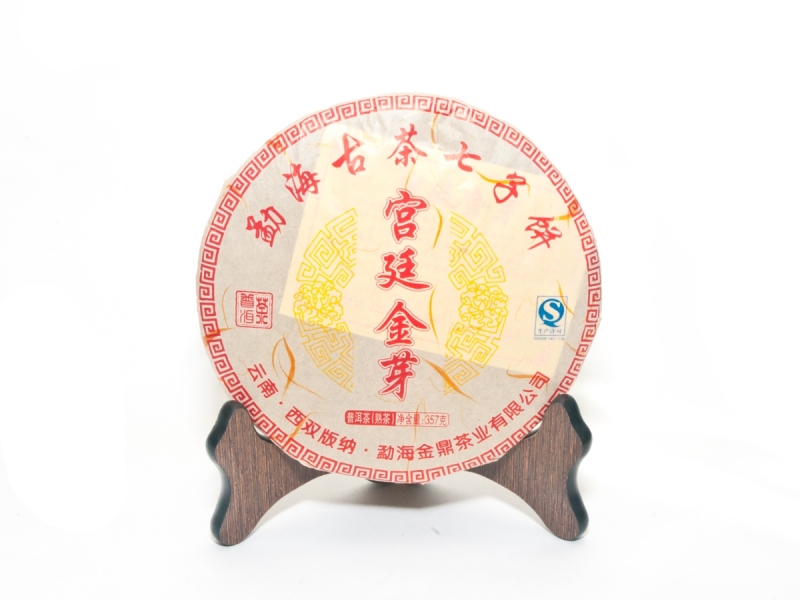
Shu Pu'er 2011 "Gongting Jinya" Jinding plant 357 g
Name: “Gongting jinya” (Chinese 宫廷金芽, pinyin gōngtíng jīnyá, Russian “Imperial golden tea buds”).
Manufacturer: Jinding (Chinese: 金鼎, pinyin: jīndǐng).
Production date: 2011.
Claimed weight: 357 grams.
Pressing form: “bincha” (Chinese 餅茶, pinyin bǐngchá, Russian “pancake”).
"Gongting Jinya" is made from tea buds, as its name suggests. The tea is beautiful in appearance, with small, reddish-brown leaves. The flavor develops quickly and swiftly. It has a very pleasant, aromatic shu. This pu-erh is a good choice for beginning your acquaintance with true heicha or continuing your tea journey.
First published on 07.01.2016.
Copyright © Chaline.Ru
|
Name in Chinese
|
宫廷金芽 |
|
Pinyin
|
gōngtíng jīnyá |
|
Translation
|
Imperial Golden Tea Buds |
|
Country
|
Китай |
|
District
|
Xishuangbanna Dai Autonomous Prefecture |
|
Date of raw material production
|
2011 |
|
Declared weight, g
|
357 |
- Reviews
- Vkontakte
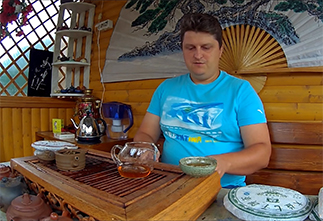
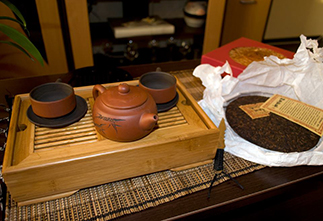
The question often arises: how to brew puerh correctly? Sometimes the phrase "to get high" is added to it. Moreover, everyone has their own understanding of this phrase. Some mean vigor, and some - intoxication. So how to brew puerh tea correctly? Let's consider several options.

Traveling through the tea mountains, we found ourselves in another land of blue roofs - the village of Zhongcai, which is located in the Menghai district of Yunnan province. According to tradition, we were shown another local tea tree, which, according to the Chinese, is at least a million years old :) The village is very authentic, not designed for tourists, there are many wild pu-erhs there and, of course, we were warmly received. They treated us to local cuisine and tea. We also asked the residents about the prices of tea and how they have changed in recent years.
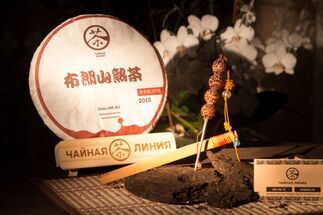
The tea ceremony occupies a special place in the centuries-old Eastern tradition. And although the essence of this phenomenon remains constant, the nature and external manifestations of the tea ceremony in different nations have their own national characteristics. In each Chinese province, the tea ceremony and the tea used in it are varied: for example, residents of the southern provinces prefer green tea, and residents of the northern provinces - red tea, in Fujian province they more often use Oolong tea, and in Yunnan province Puer tea is widely known.


