



-
0 Saturation
-
0 Aftertaste
-
0 Aroma
-
0 Effect
-
0 Balance
-
0 Body
Shu Pu'er 2012 "Gongbing" from "Kaishunhao" plant 357 g
Name: “Gongbin” (Chinese: 貢餅, pinyin gòngbǐng).
Manufacturer: "Kaishunhao" (Chinese: 開順號, pinyin kāishùnhào).
The raw material is grown in Xishuangbanna Dai Autonomous Prefecture (Chinese: 西双版纳州, pinyin: xī shuāng bǎn nà zhōu), Yunnan Province (Chinese: 云南省, pinyin: yúnnán shěng).
Production date: 2012.
Claimed weight: 357 grams.
Pressing form: “bincha” (Chinese 餅茶, pinyin bǐngchá, Russian “pancake”).
The name of the tea can be translated as "Selected Pancake," and the name of the tea factory, since its appearance in our online store, has been written as "Discover Your Happiness." However, the Chinese love to use meaningful words in titles, and for example, the name of this same manufacturer can be reinterpreted as "Creating a Successful Business."
The pu-erh tea produced by the Kaishunhao brewery is rich and full-flavored, as is traditional. Do you love shu pu-erh and drink it every day? Gongbing is the choice for you.
First published on 07.01.2016.
Copyright © Chaline.Ru
|
Country
|
Китай |
|
Manufacturer
|
ООО "Чайная Линия" |
|
Year of pressing
|
2026 |
|
Pressing form
|
Бин Ча (блин) |
|
Declared weight, g
|
200 |
|
Fermentation method
|
With a lift-off from the ground |
|
Type of tea raw material
|
Young trees (50-100 years) |
- Reviews
- Vkontakte
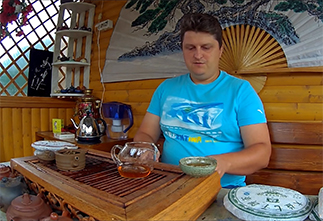
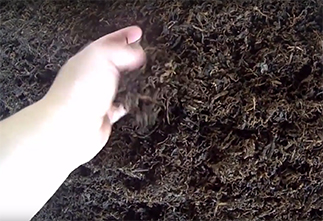
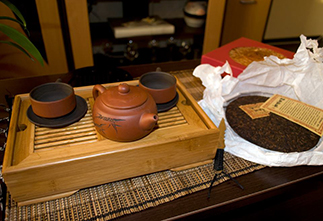

Traveling through the tea mountains, we found ourselves in another land of blue roofs - the village of Zhongcai, which is located in the Menghai district of Yunnan province. According to tradition, we were shown another local tea tree, which, according to the Chinese, is at least a million years old :) The village is very authentic, not designed for tourists, there are many wild pu-erhs there and, of course, we were warmly received. They treated us to local cuisine and tea. We also asked the residents about the prices of tea and how they have changed in recent years.
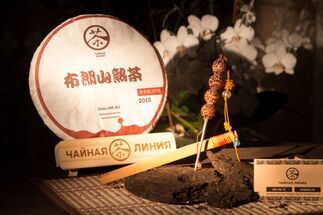
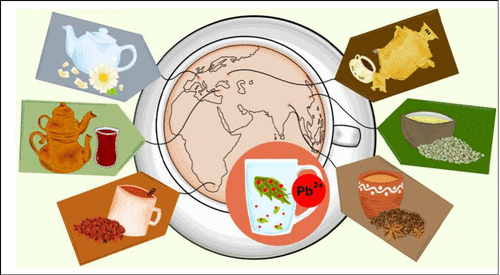
The tea ceremony holds a special place in the centuries-old Eastern tradition. While its essence remains constant, the nature and external manifestations of the tea ceremony vary among different cultures. Each Chinese province has its own distinct tea ceremony and tea used: for example, residents of the southern provinces prefer green tea, while those in the northern provinces prefer red tea. Oolong tea is more commonly used in Fujian Province, while Pu'er tea is widely known in Yunnan Province.


