



-
0 Saturation
-
0 Aftertaste
-
0 Aroma
-
0 Effect
-
0 Balance
-
0 Body
易武 • 普洱茶 (熟茶)
yìwǔ • pǔ'ěrchá (shúchá)
Yiwu • puercha (joking)
Yiwu • Pu-erh tea (shu-pu-erh)
Manufacturer: " Menghai Xian Zhoushi tea zezhen " rus. "LLC Menghai Tea Factory Zhoushi").
Quality certificate: QS 5328 1401 0005.
Yiwu Shu Pu'er was produced according to the GB/T22111-2008 production standard at the Zhoushi factory in Menghai County in 2014. The raw material for this pu'er was collected in the Yushan Mountains (易武山, yìwǔshān). The manufacturer states on the packaging that Yiwu Pu'er was produced using selected large-leaf raw tea from tree-like pu'er tea trees. The stylish packaging, which depicts a mountain landscape, conceals a beautiful pu'er tea cake (Chinese: 饼茶, pinyin: bǐngchá) of a black-red color. In a warm teapot, the top notes of the aroma are walnut, with a warm, creamy aroma deeper down. When brewed, Yiwu Pu'er tea reveals its berry aroma and currant-like tartness. The flavor is rich, with pronounced sweet and sour undertones and a slight bitterness that complements the body of the drink. When steeped strongly, the "oil" infusion takes on an infinitely dark black color, absorbing the surrounding light.
|
Name in Chinese
|
易武 |
|
Pinyin
|
yìwǔ |
|
Country
|
Китай |
|
District
|
Xishuangbanna Dai Autonomous Prefecture |
|
Manufacturer
|
ООО "Чайная Линия" |
|
Date of raw material production
|
2026 |
|
Declared weight, g
|
200 |
- Reviews
- Vkontakte
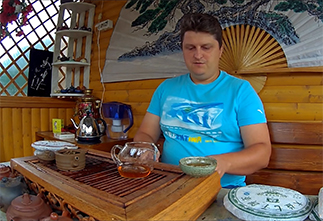
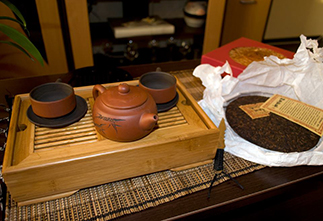
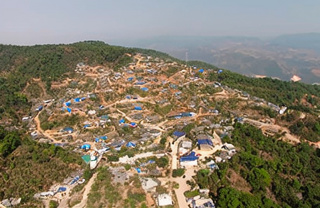
Traveling through the tea mountains, we found ourselves in another land of blue roofs - the village of Zhongcai, which is located in the Menghai district of Yunnan province. According to tradition, we were shown another local tea tree, which, according to the Chinese, is at least a million years old :) The village is very authentic, not designed for tourists, there are many wild pu-erhs there and, of course, we were warmly received. They treated us to local cuisine and tea. We also asked the residents about the prices of tea and how they have changed in recent years.
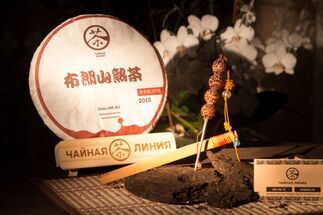
The tea ceremony holds a special place in the centuries-old Eastern tradition. While its essence remains constant, the nature and external manifestations of the tea ceremony vary among different cultures. Each Chinese province has its own distinct tea ceremony and tea used: for example, residents of the southern provinces prefer green tea, while those in the northern provinces prefer red tea. Oolong tea is more commonly used in Fujian Province, while Pu'er tea is widely known in Yunnan Province.


