



-
0 Saturation
-
0 Aftertaste
-
0 Aroma
-
0 Effect
-
0 Balance
-
0 Body
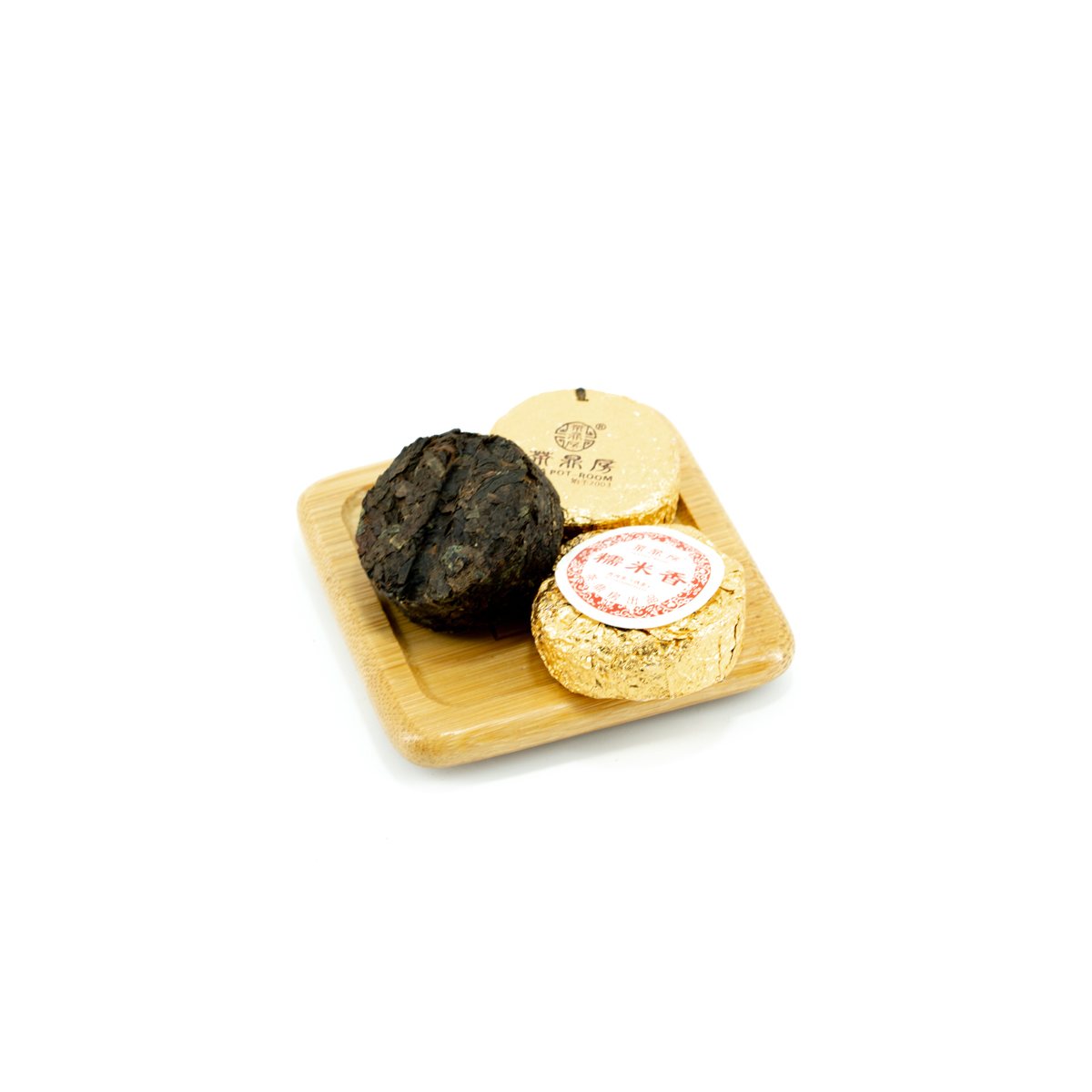
Small round shu pu-erh tea tile in gold paper "Aroma Nomi" (CDF004)
Whale. 熟金纸糯香小玉饼, pinyin shú jīnzhǐ nuò xiāng xiǎo yù bǐng
Information from the brochure
Manufacturer's part number: (CDF004)
Type: shu pu'er (subspecies: nomi grass aroma)
Manufacturer: Dingfang Gongfang Company, Yunnan (Chinese: 云南鼎房工仿, pinyin yúnnán dǐngfáng gōngfǎng).
Features: Created by blending pu-erh and nomi tea in a specific proportion. Pu-erh tea warms, promotes weight loss, detoxifies the body, and has a laxative effect. Nomi tea, meanwhile, has a hematopoietic effect, "fills the void" (traditional Chinese medical term), suppresses sweating, and has a beneficial effect on the spleen. Suitable for women, young children, and the elderly.
This shu pu-erh tea comes in tablet form, wrapped in gold foil. This packaging is very convenient for dosing: one tablet per serving, whether in a teapot or a regular mug. It has a glutinous rice aroma (Chinese: 糯米香, pinyin: nuòmǐ xiāng).
Shu pu-erh is a black tea (heicha) according to the Chinese classification. Its production technology was developed in the early 1970s. The raw material is leaves from mature tea trees in Yunnan Province (Chinese: 云南, pinyin: yúnnán). This tea holds a special place among Russian tea lovers.
If you brew using the Chinese method, we recommend not drinking the first infusion, but rather saturating the pu-erh with moisture and then draining it so that the aroma and flavor can be further developed.
First published on March 14, 2015.
Edited 05.02.2018.
Copyright © Chaline.Ru

|
Name in Chinese
|
糯米香金色小沱茶 |
|
Pinyin
|
nuòmǐ xiāng jīnsè xiǎo tuóchá |
|
English name
|
Nomisyan |
|
Translation
|
Small tea nests in gold foil with Nomi aroma |
|
Country
|
China |
|
Provinces
|
Yunnan (云南) |
|
Region
|
Menghai (勐海) |
|
Year of pressing
|
2014 |
|
Declared weight, g
|
6 |
|
Size
|
2x2x2 |
|
Length, cm
|
2 |
|
Width, cm
|
2 |
- Reviews
- Vkontakte
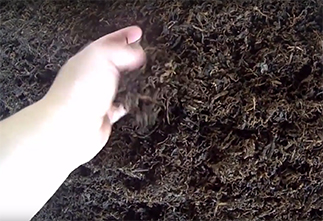
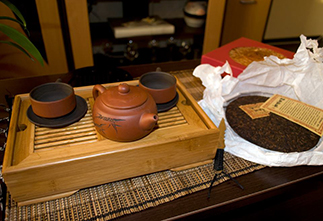
The question often arises: how to brew puerh correctly? Sometimes the phrase "to get high" is added to it. Moreover, everyone has their own understanding of this phrase. Some mean vigor, and some - intoxication. So how to brew puerh tea correctly? Let's consider several options.
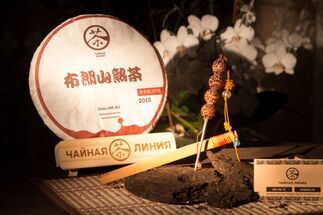
The tea ceremony occupies a special place in the centuries-old Eastern tradition. And although the essence of this phenomenon remains constant, the nature and external manifestations of the tea ceremony in different nations have their own national characteristics. In each Chinese province, the tea ceremony and the tea used in it are varied: for example, residents of the southern provinces prefer green tea, and residents of the northern provinces - red tea, in Fujian province they more often use Oolong tea, and in Yunnan province Puer tea is widely known.


