








-
0 Saturation
-
0 Aftertaste
-
0 Aroma
-
0 Effect
-
0 Balance
-
0 Body
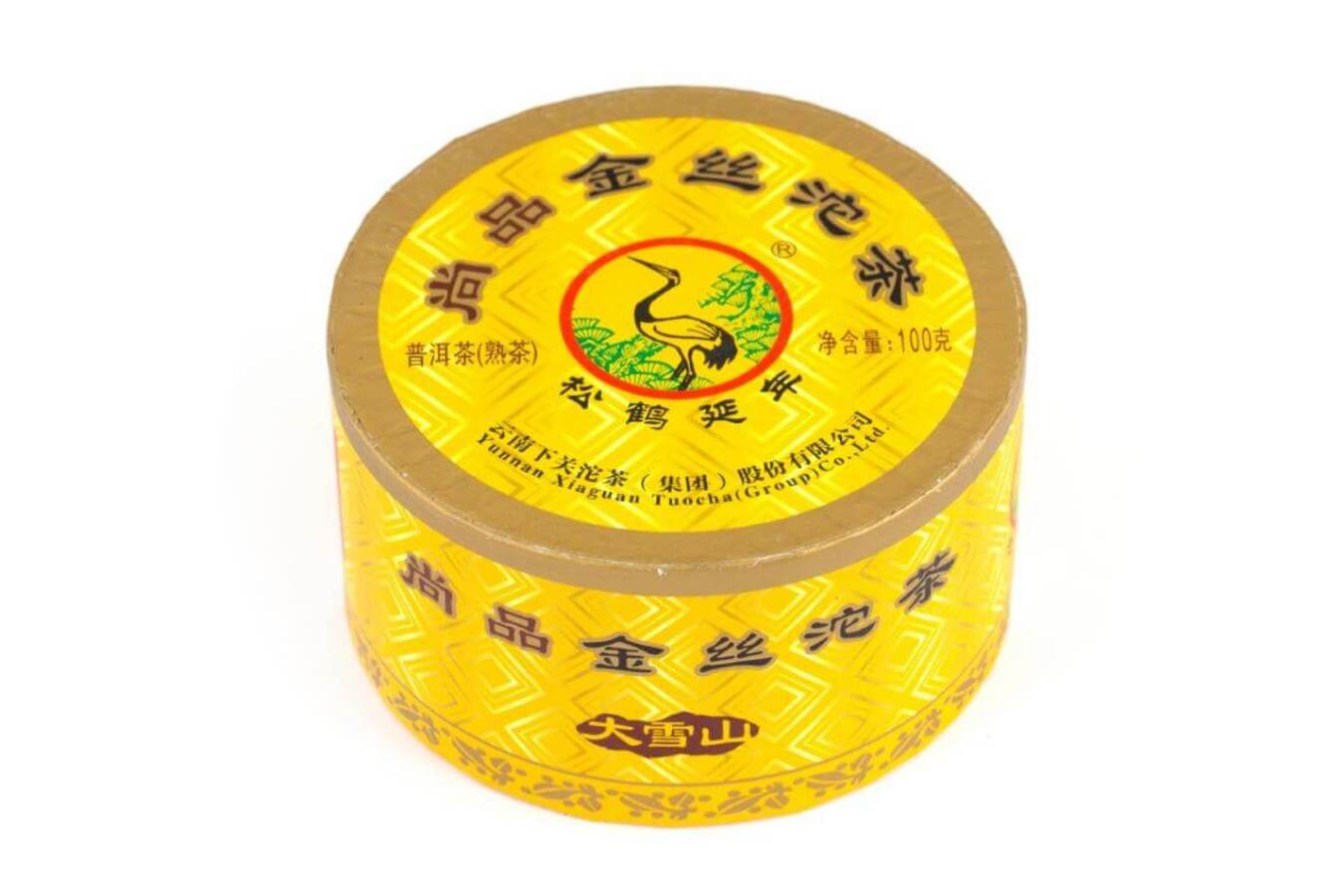
Whale. 尚品金丝沱茶, pinyin shàngpǐn jīnsī tuóchá.
Date of manufacture: 2018
Declared weight: 100 g.
Shape: tocha (nest).
Brand: Song He (Russian: Pine and Crane, Chinese: 松鹤, pinyin: sōnghè).
Manufacturer: Yunnan xiaguan tocha jituan (Chinese: 云南下关沱茶集团, pinyin yúnnán xiàguān tuóchá jítuán).
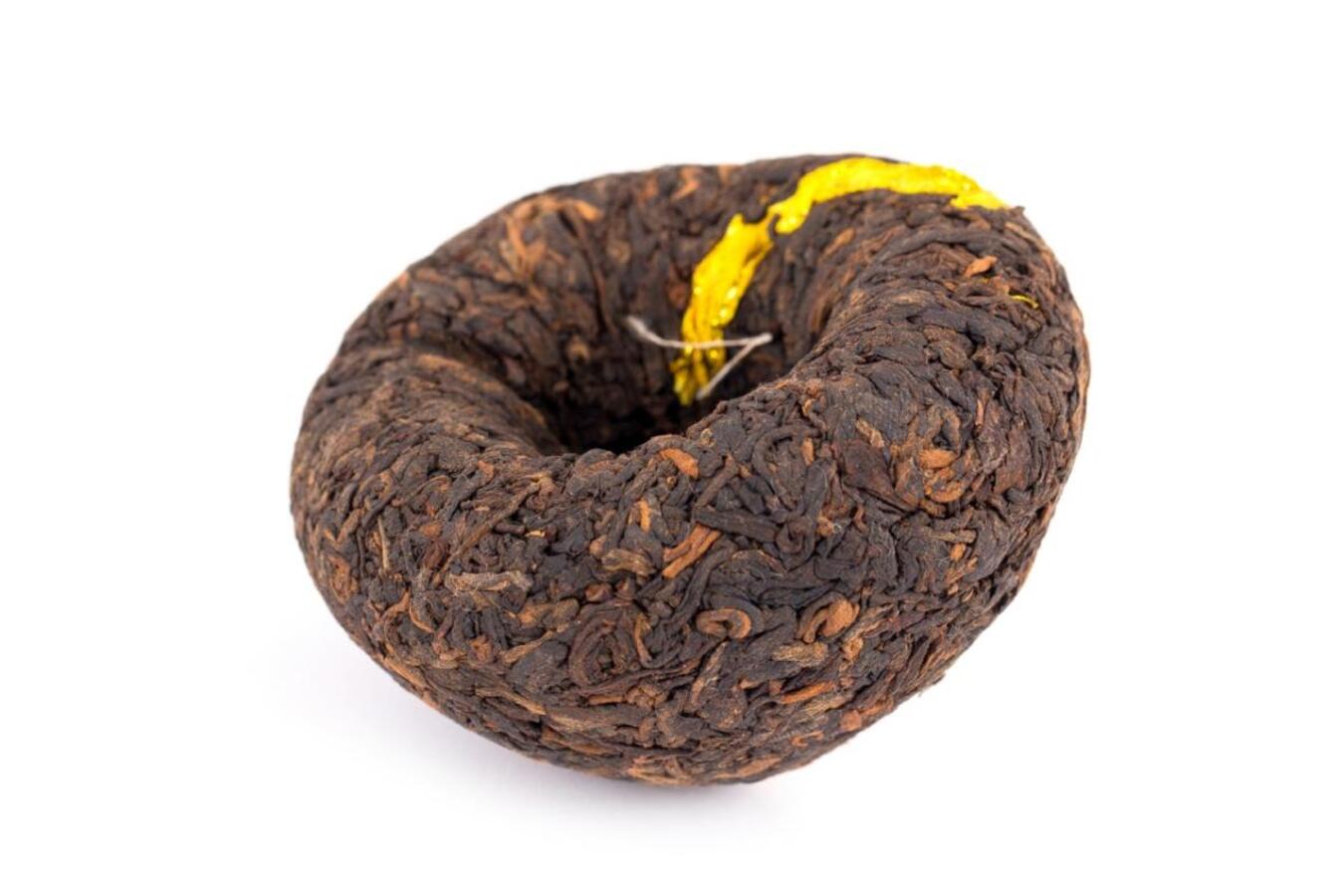
The most popular pressing shape for pu'er tea from the Xiaguan factory is the tocha (cup, nest, or dome). It differs from classic shapes such as a cake or brick in its compactness. During production, the convenient shape of this shape prevents the raw material from spoiling and molding due to its large surface area exposed to air. The golden ribbon pressed into the pu'er tea is a hallmark of this brand's quality.
The raw material used for the Golden Thread sharpening is of the highest quality, with whole, unbroken leaves and buds.
Pine and Crane brand shu pu-erh is characterized by a soft, smooth flavor and a classic nutty-woody aroma. It easily withstands five to six steepings. Xiaguan Golden Thread Tocha is packaged in a branded box, making it easy to store. The tocha is pressed tightly, but the raw material separates fairly easily.
When dry, the tea leaves have a delicate woody-nutty aroma. When steeped, the dry leaf's aromas unfold, becoming deeper and richer. The infusion is dense, cinnamon-colored. The taste reveals a hint of sweetness and hazelnut notes. When steeped, this pu-erh tea can withstand 5-6 steeps, reaching its peak strength after 3-4 steeps. Even at its peak, the flavor remains smooth, without astringency or bitterness.
Ideal for those who enjoy shu pu-erh teas with a woody aroma and flavor profile and no bitterness in the taste.
|
Name in Chinese
|
尚品金丝沱茶 |
|
Pinyin
|
shàngpǐn jīnsī tuóchá |
|
English name
|
Shanping Jinxi Tuocha |
|
Translation
|
High quality nest with gold thread |
|
Country
|
China |
|
District
|
Dali-Bai Autonomous Okrug |
|
Provinces
|
Yunnan (云南) |
|
Prefecture
|
Dali |
|
Habitat
|
Дали (大理, dàlǐ) |
|
Manufacturer
|
Сягуань (云南下关沱茶集团) |
|
Date of raw material production
|
2018 |
|
Year of pressing
|
2018 |
|
Pressing form
|
Tuo Cha (Tuo Tea) |
|
Declared weight, g
|
100 |
|
A variety of tea tree (bush)
|
Da Ye Zhong |
|
Size
|
10x10x6 |
|
Length, cm
|
10 |
|
Width, cm
|
10 |
- Reviews
- Vkontakte
Xiaguan Tea Factory has a history of over 70 years. It was founded in 1941 and is located in Dali, Yunnan Province, which is often called the Eastern Switzerland. Beautiful nature and favorable weather, mountains and crystal clear lakes make it possible to produce excellent quality puer. Xiaguan Tea Factory is one of the main producers of pressed tea in China. It produces over 6,000 tons of puer tea annually. Xiaguan Factory produces both Shu puer and Sheng puer. However, the most popular and recognized are Sheng puer tocha (in the form of a nest, bowl) and bingcha (in the form of a pancake).
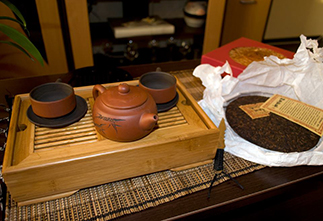
The question often arises: how to brew puerh correctly? Sometimes the phrase "to get high" is added to it. Moreover, everyone has their own understanding of this phrase. Some mean vigor, and some - intoxication. So how to brew puerh tea correctly? Let's consider several options.
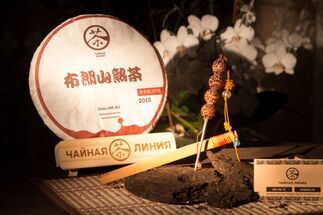
The tea ceremony occupies a special place in the centuries-old Eastern tradition. And although the essence of this phenomenon remains constant, the nature and external manifestations of the tea ceremony in different nations have their own national characteristics. In each Chinese province, the tea ceremony and the tea used in it are varied: for example, residents of the southern provinces prefer green tea, and residents of the northern provinces - red tea, in Fujian province they more often use Oolong tea, and in Yunnan province Puer tea is widely known.
Need a consultation?
Our specialists will answer any question of interest


