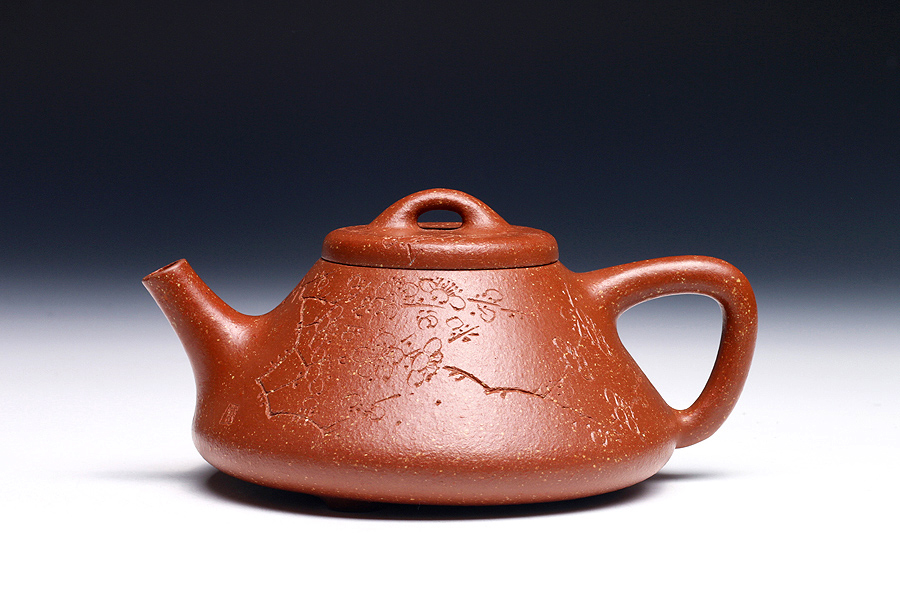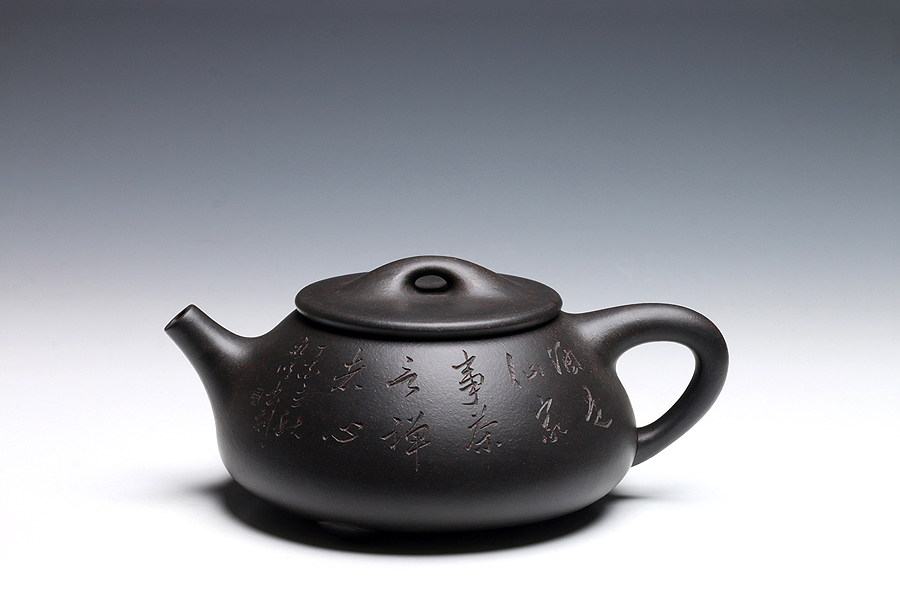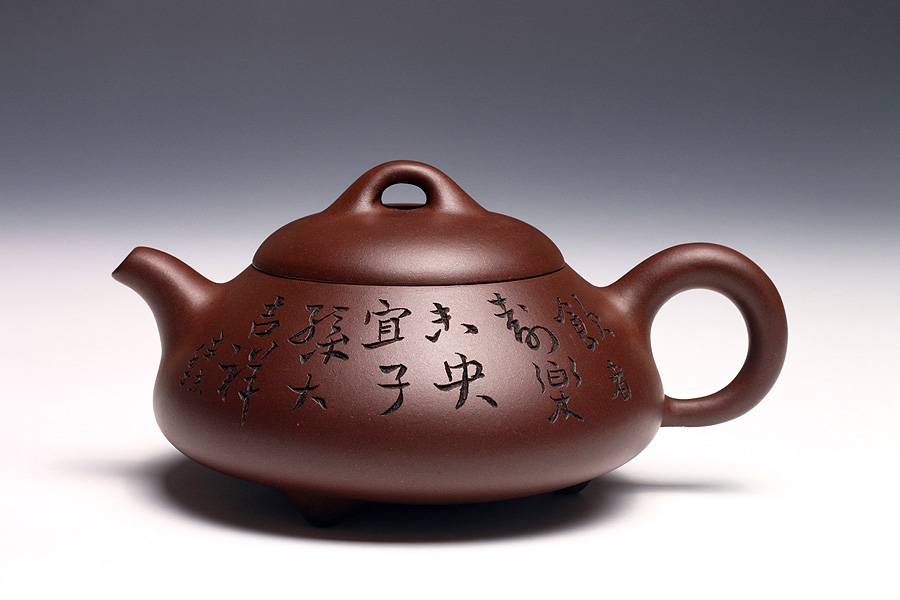



Форма чайника "Шипяо" (каменный совок)
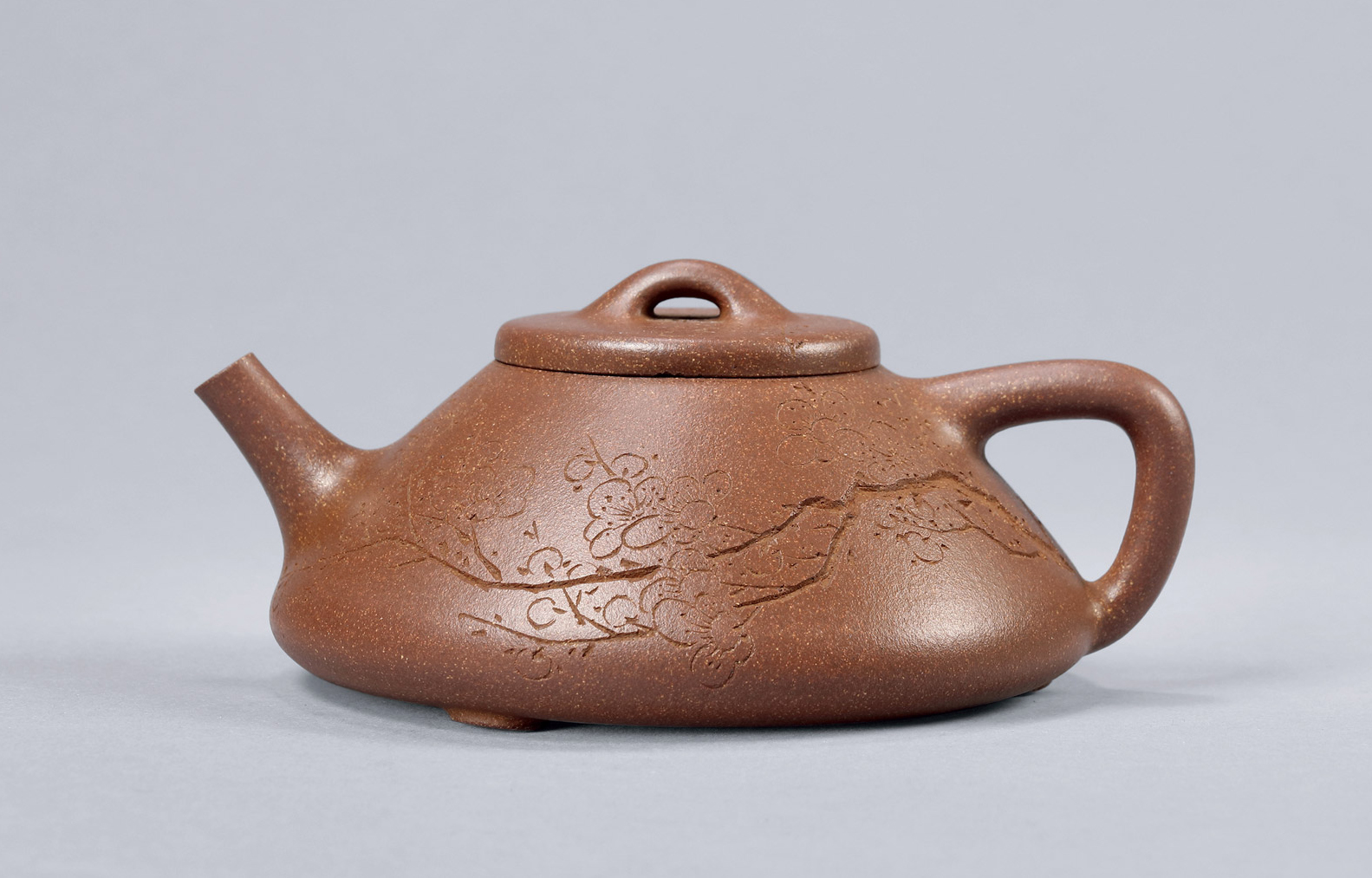
The canonical teapot model, later divided into subspecies, was approved as the original form of the Yixing teapot.
The original name is Shipiao (Chinese: 石铫, pinyin: Shí diào) (the second character is different), where the character 铫 in the ancient dictionary "sihai" is interpreted as a vessel with a handle, originally made of metal, later of ceramics. It was first mentioned by the adviser of the Emperor Song Dupo (Chinese: 苏东坡, pinyin: sū dōngpō), living during the Northern Song Dynasty (960-1127), who noticed that when brewing tea in a teapot made of Yixing clay, the drink acquired a more pleasant taste than when prepared in copper and iron utensils. He took the local material and created a clay teapot in the image of metal utensils. The main feature of this teapot is that the upper part is small and the lower part is large, the center of gravity is lowered, it is stable in use. The spout is short and powerful, the water flows quickly. Made in the shape of a "pyramid" with a handle in the form of an inverted triangle, complementing the triangular shape of the body of the teapot, creates a harmonious aesthetic effect. The flat lid, neat handle on the lid, emphasizes the sophistication.
This variety was given the name Shipiao (stone scoop) (Chinese: 石瓢壶, pinyin: Shí piáo hú) by the ceramic master Gu Jingzhou (Chinese: 顾景舟, pinyin: Gùjǐngzhōu), and the name has stuck ever since.
Based on the canonical form of Shipiao, other forms have been created by various masters: