




In China, you can often find paintings that depict a dragon (Chinese: 龙, pinyin: lóng) and a phoenix (Chinese: 凤凰, pinyin: fènghuáng) together. This is one of the traditional auspicious patterns. The dragon symbolizes the masculine, bright, active principle "Yang" (Chinese: 阳, pinyin: yáng). The phoenix represents the feminine, dark, passive principle "Yin" (Chinese: 阴, pinyin: yīn). The dragon and phoenix also symbolize the emperor and empress.
Quite often, a pearl is depicted between the dragon and the phoenix, which they reach for. This is the fruit of their mutual love and wisdom.
There's a Chinese expression: "The dragon flies, the phoenix dances" (Chinese: 龙飞凤舞, pinyin: lóng fēi fèng wǔ). This phrase has many meanings. The dragon's ascent signifies an emperor's ascension to the throne, or a hero's feat. The phoenix's dance signifies leisure. In everyday life, it also symbolizes the alternation of work and rest. This expression is also used to describe masterful calligraphy, with its sweeping hand movements and the master's exquisite handwriting.
This set of bowls is a family set for husband and wife. The bowl with the dragon is for the man, further emphasizing the status of the head of the family. The bowl with the phoenix is for the woman.
|
Name in Chinese
|
龙飞凤舞 |
|
Pinyin
|
lóng fēi fèng wǔ |
|
Translation
|
The dragon flies, the phoenix dances |
|
Country
|
China |
|
Materials of utensils
|
Фарфор |
|
Type of painting
|
Decal |
|
Volume, ml
|
120 |
- Reviews
- Vkontakte
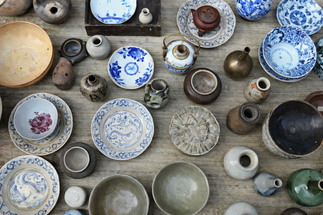
Wonderfully thin. Musical. Snow-white and translucent. Which led those who revealed the secret of its recipe to foreigners to the scaffold. All this is about Chinese porcelain (Chinese: 瓷, pinyin: cí), a unique material in which ordinary water turns into a Drink.
Why was the Celestial Empire so afraid of losing the recipe, and how did it eventually reveal it to the world?
What is the reason for the universal admiration for tea cups made from original imperial porcelain?
What kind of painting is there on authentic Chinese porcelain tableware?


