




-
10 Saturation
-
9 Aftertaste
-
9 Aroma
-
10 Effect
-
9 Balance
-
10 Body
Tieguanyin Kugua (铁观音苦瓜): an unusual union of oolong and bitter gourd from Anxi
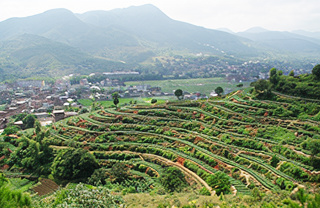
Chinese tea culture is renowned not only for its ancient traditions but also for its constant search for new forms and flavors. One striking example of this innovation is Tieguanyin Kugua (铁观音苦瓜, Tiě guānyīn kǔguā) – the famous Tieguanyin oolong tea, processed and aged inside the bitter gourd (kugua). This unique tea hails from the heart of oolongs – Anxi County (安溪县, Ānxī xiàn) in Quanzhou City (泉州, Quánzhōu) in Fujian Province (福建, Fújiàn).
This tea is based on Tieguanyin, one of the most famous Chinese oolongs, named after the Bodhisattva Guanyin. Traditionally, Tieguanyin from Anxi is renowned for its vibrant floral (lilac-scented) aroma, buttery texture, and long, refreshing finish. The tea plant variety used to brew this tea is called Tieguanyin.
Kugua (苦瓜, kǔguā), also often called bitter melon or Chinese bitter gourd, is a vegetable resembling a bumpy cucumber. In Asian cuisine and medicine, it is prized for its medicinal properties, including its characteristic bitterness.
Unique creation process
The production of Tieguanyin kugua is an entire art, combining tea craftsmanship and natural form:
- Pumpkin Preparation: Cut off the top (stem) of fresh bitter gourd.
- Extracting the Pulp: Using a special tool, carefully remove the insides of the pumpkin, leaving the hollow shell.
- Tea Filling: The prepared gourd is tightly packed with processed Tieguanyin tea leaves. Fermented Tieguanyin is used.
- Roasting: The tea, placed in a pumpkin, is roasted in special roasting ovens. This process allows the tea to absorb the pumpkin's aromas and juices, while the pumpkin itself dries and imparts its flavors to the tea.
Appearance, aroma and taste
- Appearance: The finished product is dried bitter gourd filled with tea. The tea itself is formed by tightly rolled lumps that turn brown during processing, sometimes with a yellowish tint.
- Aroma: When dry, the aroma is complex: floral notes, hints of spice, and even oak bark are present. A characteristic "baked" aroma is present, indicating the roasting process.
- Taste: The infusion is oily, with a tartness and distinct sweetness characteristic of aged or deeply processed teas (lao cha - 老茶). The key characteristic is the influence of kugua: during brewing, an unusual but harmonious bitterness emerges, which transforms into a long chocolate-coffee aftertaste. The creators strove to harmoniously combine the tea's honeyed sweetness with notes of smoke (from roasting) and flowers.
Benefits and traditions
Interestingly, in China, locals often brew this tea directly with pieces of pumpkin skin. It is believed that the polypeptides contained in kugua can help regulate blood sugar levels.
Brewing recommendations
For brewing Tieguanyin kugua it is recommended:
- Break off a small piece of pumpkin along with the tea.
- Use about 10 grams of tea leaves per standard volume (for example, a 100-150 ml gaiwan).
- The water should be hot, about 95-100°C.
- Rinse the tea with boiling water before brewing for the first time.
- Steep in short infusions, starting with 15-20 seconds and gradually increasing the time. The tea will last 6-8 infusions.
Storage
Tieguanyin kugua is well suited for long-term storage and further aging. Over time, the bitterness can soften, and the flavor can become deeper and more interesting.
Tieguanyin Kugua is a unique and surprising tea that breaks stereotypes. It demonstrates how two completely different products—an exquisite oolong tea and a bitter vegetable—can combine to create a unique flavor profile. This tea evolves from steeping to steeping and over time, captivating the taste buds of connoisseurs of high-quality and unusual teas. It is an excellent choice for those seeking new culinary experiences and wanting to explore modern experiments in the ancient art of tea.

"Tie Guanyin Kugua" (Chinese: 铁观音苦瓜, pinyin: tiěguānyīn kǔguā, Russian: "Iron Goddess of Mercy in Chinese Bitter Gourd Khukua") is a fermented Tie Guanyin tea aged in Chinese bitter gourd. It is often called a bitter melon, similar in appearance to a cucumber. Origin: Anxi County (安溪县, Ānxīxiàn), Quanzhou City (泉州, Quánzhōu), Fujian Province (福建, Fújiàn), China. To produce it, the stem is cut off on one side, the insides are removed with a special tool, and then packed with tea. After this, the tea in the kugua is roasted in special roasting ovens. In China, locals brew tea with pumpkin, as the polypeptides contained in the shell are associated with blood sugar regulation.
The tea appears as tightly rolled brown lumps with a yellowish bloom. When dry, the aroma reveals hints of flowers, spices, and oak bark. The flavor is oily, tart, and distinctly sweet, reminiscent of "lao cha." During steeping, the kugua tea develops an unusual bitterness, fading into a chocolate-coffee aftertaste. Tieguanyin kugua easily withstands 6-8 steepings per 10 grams of tea leaves at a water temperature of 95-100°C.
This tea is suitable for storage and subsequent aging. This unique tea is perfect for anyone looking to surprise themselves. It was created to demonstrate the ability to harmoniously combine honeyed sweetness with hints of smoke and flowers. Tieguanyin Kugua is capable of changing and captivating the taste buds of connoisseurs of quality tea.
|
Name in Chinese
|
铁观音苦瓜 |
|
Pinyin
|
tiěguānyīn kǔguā |
|
English name
|
Te guan yin in Chinese bitter gourd |
|
Translation
|
Tie Guan Yin in Chinese bitter gourd |
|
Tea variety
|
Tie Guan Yin |
|
Country
|
China |
|
District
|
Quanzhou City |
|
Provinces
|
Fujian (福建) |
|
Region
|
Quanzhou (泉州) |
|
Habitat
|
Anxi (安溪, ānxī) |
|
A variety of tea tree (bush)
|
Tie Guan Yin |
- Reviews
- Vkontakte

In the coastal province of Fujian, there is a small provincial Chinese city with a population of more than a million people. In economic theory, there is a concept of perfect competition - this is a market condition when many manufacturers sell the same product to buyers, and this product is not such a problem for anyone who wants to produce it.


