



-
9 Saturation
-
9 Aftertaste
-
9 Aroma
-
9 Effect
-
9 Balance
-
9 Body
Name: "Shuixian"
Translation: "Narcissus" or "Lord of the Waters"
Chinese: 水仙, pinyin: shuǐ xiān
Origin: Wuyi Mountains (Chinese: 武夷山, pinyin wǔyíshān), Fujian Province (Chinese: 福建, pinyin fújiàn), China.
A beautiful legend about the origin of this tea tells that in the mountains near Zhuxiandong Cave (Chinese: 祝仙洞, pinyin: zhùxiāndòng, "Cave of the Praying Immortals/Xian"), a farmer was collecting brushwood and came across a large bush resembling a small tree with snow-white flowers. Since the area was cold and damp, he decided to pick the leaves and make a warming drink. He liked the surprisingly pleasant and vibrant flavor so much that he immediately named the tea "Water Immortal" and began cultivating it. The name "Narcissus" was given to the tea later, for its aroma's resemblance to the flower's scent.
The word "Xian" in the mountain's name, "Zhu Xian Dong," is the same as in the tea "Shui Xian." The word "Xian" means "immortal Taoist" or "Taoist saint."Shuixian has numerous beneficial properties, including restoring physical and mental strength, cleansing the body of toxins, and eliminating waste. When stored and consumed correctly, it can have a beneficial effect on the human body.
Due to its strong stimulating effect, it is not recommended to drink it at night. During the cold season, tea is especially beneficial because it warms you up and improves overall vitality.

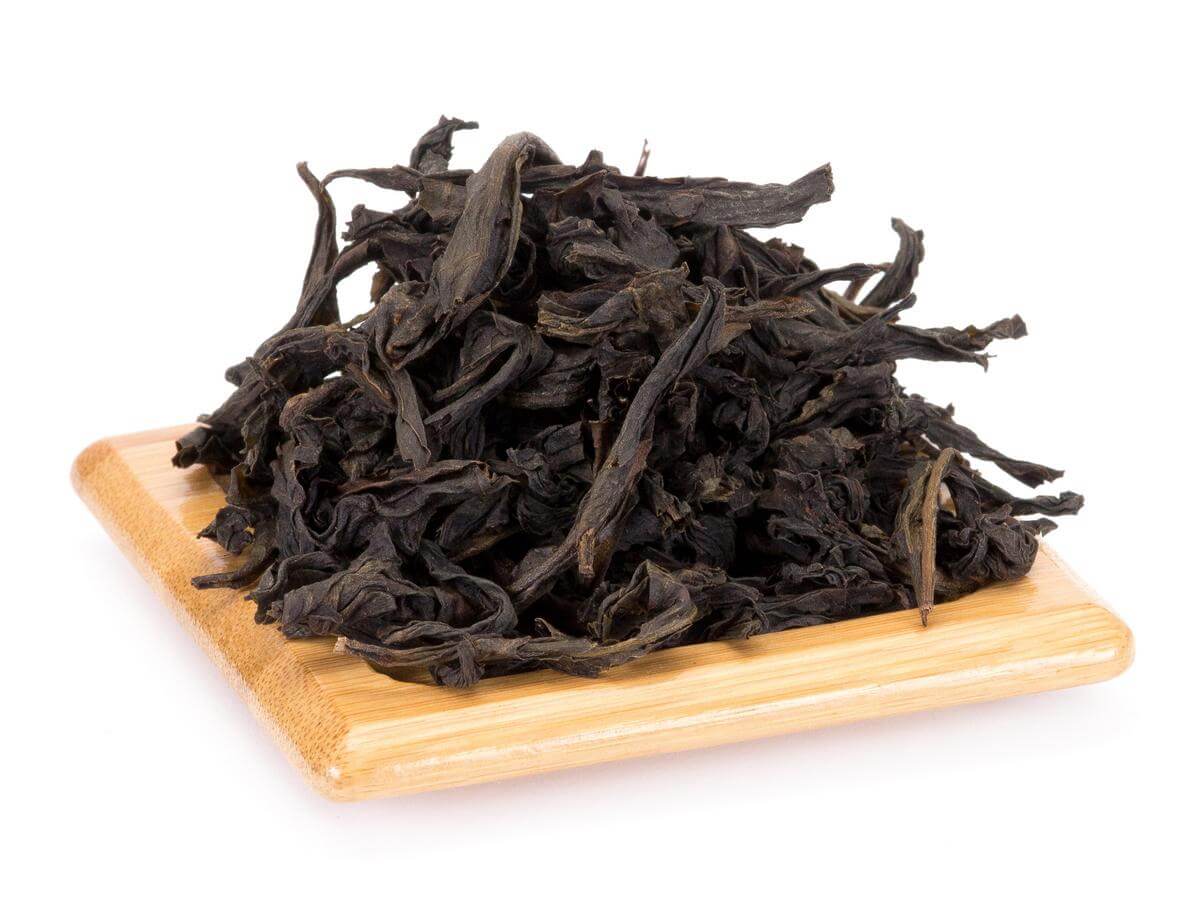
When dried, the tea leaf aroma is bright and rich, with notes of charcoal and chocolate chip cookies. When heated in a Yixing clay teapot, the aroma is deep and robust, reminiscent of dark chocolate and cream. Rinsed tea leaves in the teapot smell floral, with light notes of vanilla.
The first four steeps produce a fresh, slightly astringent taste that immediately gives way to a dark chocolate flavor, with hints of smoldering embers from fruit trees, particularly apple and cherry. By the fifth steep, the flavor weakens and becomes astringent. The high heat used to process this tea makes its presence felt.
The aftertaste that Shui Xiang leaves is slightly tart, dry, with hints of bread crusts and charcoal from fruit trees.
The infusion is a yellow-amber color with a bronze tint. The infusion is clear, with tiny pieces of tea leaves that managed to squeeze through the sieve.
Shui Xiang tea has a gentle, light effect. This variety has a gentle tonic effect, promoting concentration and calm. Like all dark oolongs, it is best brewed in a teapot made of porous Yixing clay, but a gaiwan also makes a good brewing vessel.
A decidedly masculine tea. It has character and ruggedness, astringency and boldness, yet it's easy and effortless to drink; you can easily finish all six steepings this oolong has undergone. Shui Xiang will appeal to lovers of dark, deeply roasted oolongs and those who appreciate tea with character.
|
Name in Chinese
|
武夷水仙 |
|
Pinyin
|
shuǐxiān |
|
English name
|
Shuxian |
|
Translation
|
Narcissus or Lord of the Waters |
|
Tea variety
|
Wu Yi Shui Xian |
|
Country
|
China |
|
District
|
Wuyi Mountains |
|
Provinces
|
Fujian (福建) |
|
Region
|
Yiwu Mountain (易武山) |
|
Habitat
|
Уишань Баньян (武夷山半岩, wǔyíshān bànyán) |
- Reviews
- Vkontakte
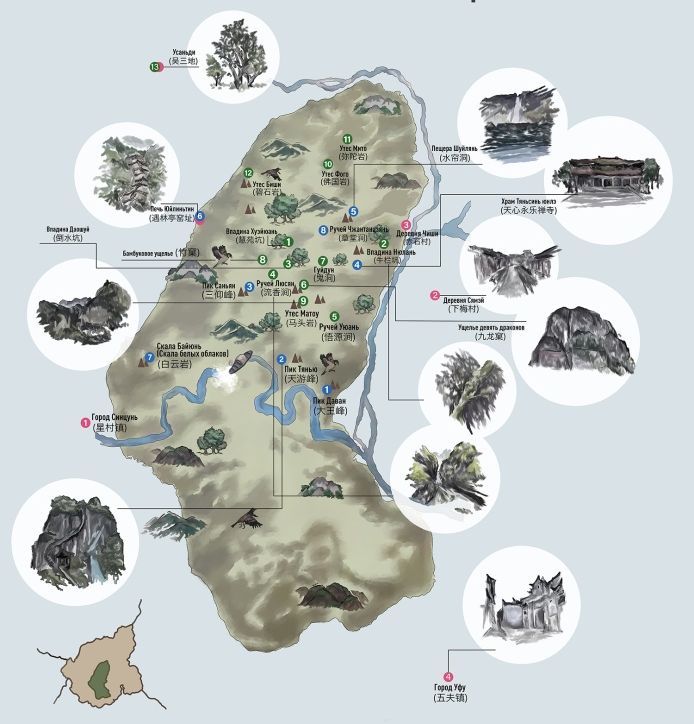

The Wuyi Mountains, and shan, as is known, is translated as "mountain" or "mountains", are located on the border of the provinces of Fujian and Jiangxi. This is a mountain range located on an area of about 1000 square kilometers. The highest point is Mount Huanggangshan, 2158 meters high, which is included in the UNESCO World Cultural Heritage, both for cultural and natural criteria.


