



-
0 Saturation
-
0 Aftertaste
-
0 Aroma
-
0 Effect
-
0 Balance
-
0 Body
Title: " Zhengshan xiaozhong "
Translation: " A small variety from that very mountain "
Whale. 正山小种, pinyin zhèngshān xiǎozhǒng
Origin: Wuyi Mountains (武夷山, wǔyíshān), Fujian Province (福建, fújiàn), China.
In its native land, this variety is considered the progenitor of all red teas. It was developed over 400 years ago by local farmers in the mid-Ming Dynasty in the Wuyi Mountains. Historically, the center of Xiaozhong's distribution was the small village of Xingcun. In European sources, Wuyi tea was called Bohea, often referring to the smaller variety. Later, other varieties of Hongcha entered the market, so the term Zhenshan began to be used for Xiaozhong, referring to Tongmu and the surrounding area, as well as areas of similar altitude.
Appearance, aroma and taste
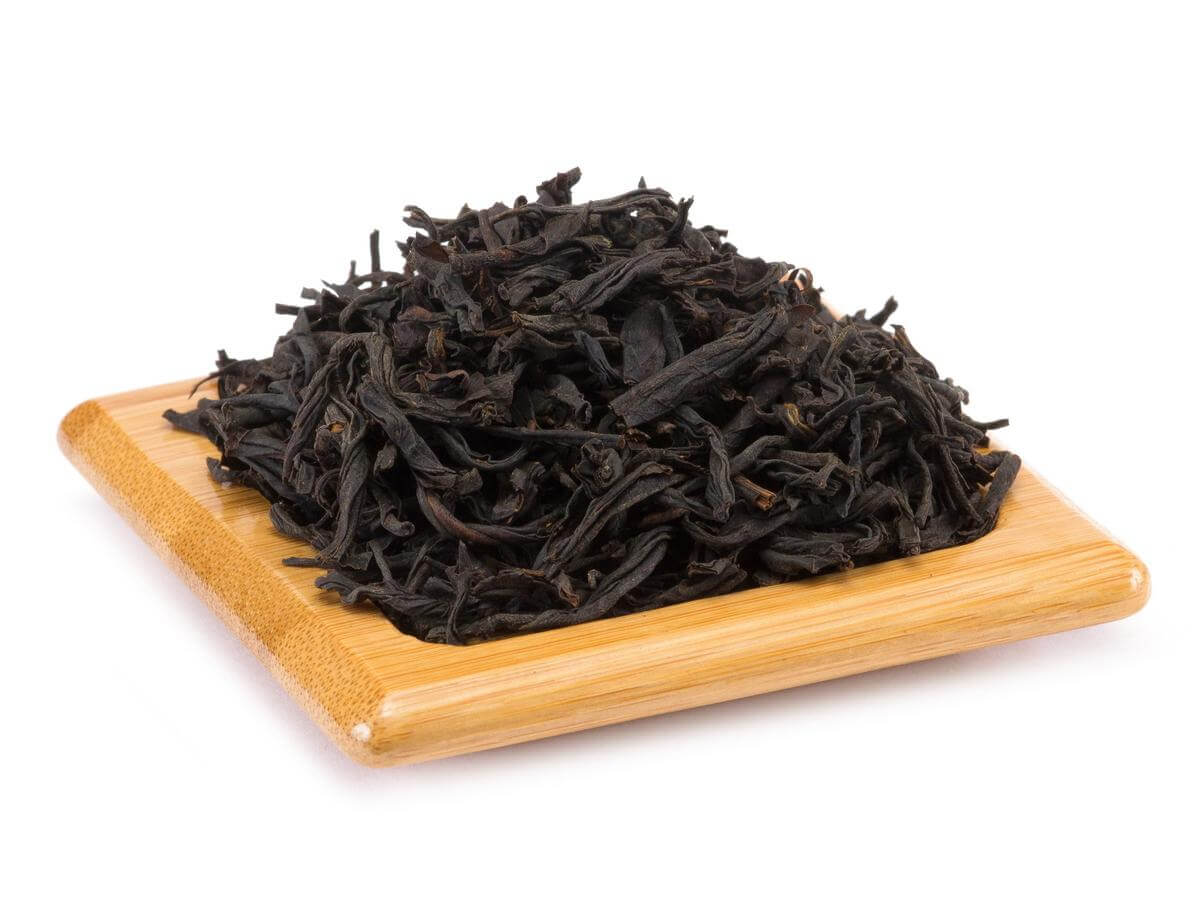
The leaf blades are twisted longitudinally and have a brownish-purple color with a slight fawn tint. The infusion is clear, with a pumpkin hue. The aroma has notes of baked goods and dark wood. The flavor is deep and velvety, with a pleasantly sweet aftertaste.
Copyright © Chaline.Ru

When dry, the tea has a silky, vibrant aroma with notes of roasted sunflower seeds, homemade halva, and dried rose petals. After washing, the aroma becomes velvety, rich, and vibrant.
The brewed tea has a sweet, silky, and soft flavor. Notes of roasted seeds, dried fruits, and spices are noticeable. By the third steeping, the flavor becomes fresher, with subtle floral and honey notes. The tea holds up well; 5 grams of dry tea leaves are enough for eight full steeps.
The aftertaste is bright and sweet, with notes of homemade halva and flower honey. The infusion is a rich amber color, clear, and very beautiful.
The recommended teapot for brewing this tea is a thick-walled Yixing clay teapot. This is essential for the best possible development of the tea's aroma and flavor.
Zhengshan Xiaozhong ( Lapsang Souchong ) warms the body very well, balances one's state, and makes one more receptive and focused. This tea is recommended for connoisseurs of all red teas; it is perfect for slow, mindful sipping on a long, cold evening.
|
Name in Chinese
|
正山小种 |
|
Pinyin
|
zhèngshān xiǎozhǒng |
|
English name
|
Zhengshan xiaojun |
|
Translation
|
Zhengshan Xiaozhong |
|
Tea variety
|
Lapsang Souchong |
|
Country
|
China |
|
District
|
Wuyi Mountains |
|
Provinces
|
Fujian (福建) |
|
Region
|
Wuyi Mountain (武夷山) |
|
Habitat
|
Уишань Баньян (武夷山半岩, wǔyíshān bànyán) |
|
A variety of tea tree (bush)
|
Xiao Zhong |
- Reviews
- Vkontakte


