



Myths, Legends, History and Facts about Chinese Tea
Nowadays it is difficult to meet a person who knows nothing about tea, which is one of the most popular drinks in the world today. Most researchers recognize China as the birthplace of tea. Chinese tea is made from the Camellia Sinensis plant, using various methods of drying tea leaves. In different provinces of the Celestial Empire it is called differently: "Tei", "Cha", "Char" and so on. In total, there are more than a hundred different names. It just so happened that tea, this aromatic drink, has now become a symbol of communication and hospitality.
History of tea and tea legends
Nobody knows the true story of the origin of this wonderful drink. But since it is a real cult in China, over five thousand years, a dozen versions and wonderful legends have been invented.
Here are some more versions of the origin of Chinese tea:
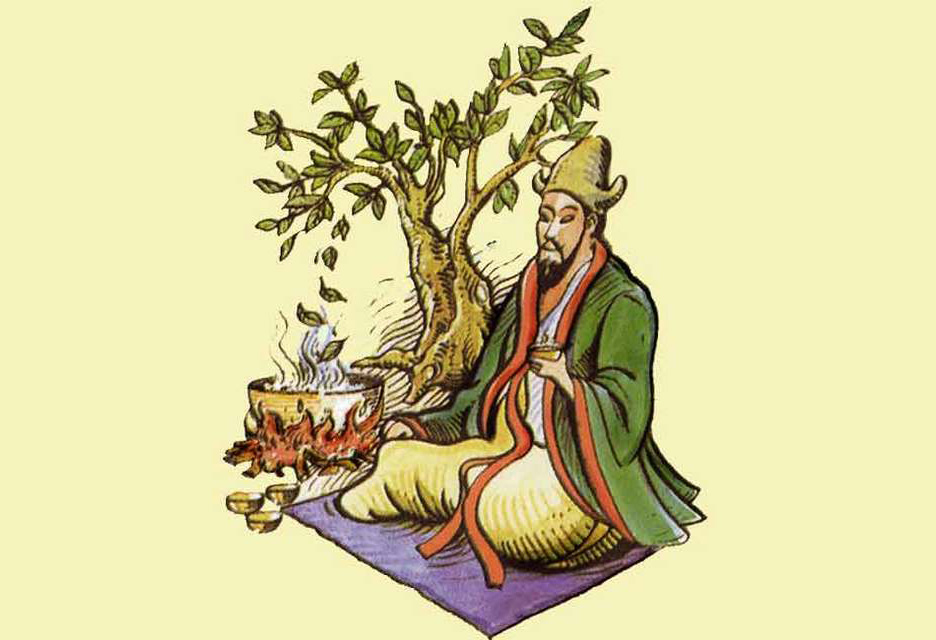
1) The first legend says that the ancient Chinese emperor Shen Nung about three thousand years ago put a pot of water to boil, into which a few leaves from a tea tree accidentally fell. Having tried the amazing drink, the emperor admired its wonderful taste. From the imperial palace, tea spread throughout China: it began to be ceremonially served when receiving the most honored guests.
2) The second legend tells how in ancient times shepherds noticed that animals, having eaten leaves from a tea bush, became incredibly cheerful. They decided to try a drink from these leaves. As a result, it turned out that it was not only invigorating, but also beneficial for health in general. And most importantly - incredibly tasty.
3) The third legend tells of how one Chinese monk decided to devote himself to prayer without a break for sleep and rest, but after a while sleep overcame him. Waking up, the frustrated monk cut off his eyelids so that they would never close against his will again. Thrown to the ground, the eyelids turned into tea leaves, from which they began to prepare a drink that drives away sleep and gives vigor.
4) One of them, the most romantic, says that a certain Emperor Yang Di collected medicinal herbs about 4000 years ago. One day he was poisoned and literally lay down to die under a tea bush. But the juice from its leaves dripped into the Emperor's mouth, and he was saved.
In the depths of centuries, the secret of the appearance of Chinese tea is lost, but one thing is clear: it appeared about five thousand years ago and became incredibly popular in the Celestial Empire and throughout the world. Although real documentary evidence is found only in treatises four hundred years old. And also in references to the Migsh dynasty, which ruled from the 14th century.
Although Chinese tea appeared thousands of years ago, it has been used as an everyday drink relatively recently – since about the 6th century AD. For many centuries before that, tea was a sacred drink, used only for religious ceremonies. Then tea was used as a medicine. And, as already mentioned above, only in the 6th century tea began to be drunk just like that, for pleasure – but only by very rich people. Tea became a national drink, present in every home, only in the 10th century AD.
Main types of Chinese tea
There are many ways to divide and classify tea: by origin, by appearance, by effect on the body, but the most common classification today is by the degree of fermentation. According to it, the main types of tea are:
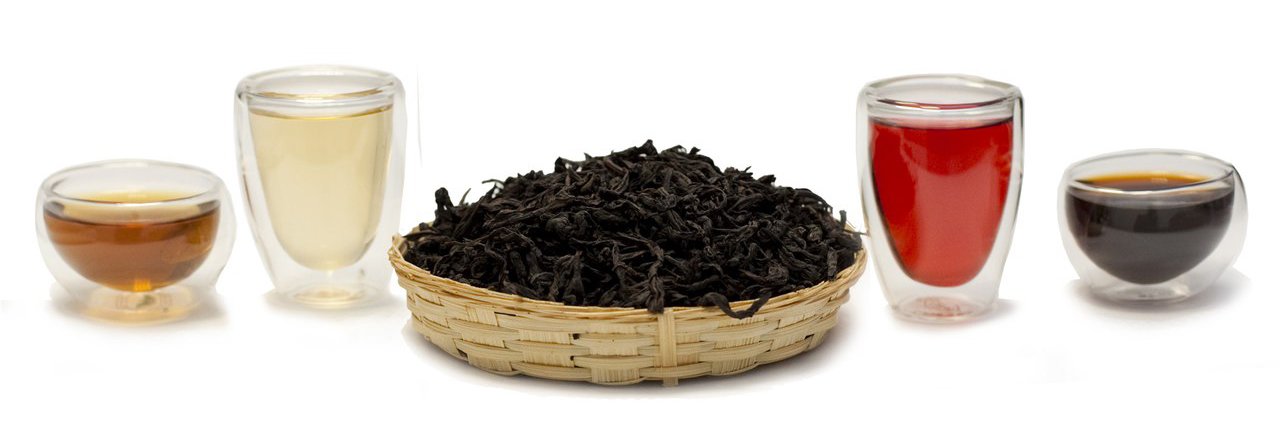
White tea – has a floral-fruity aroma. It is considered a great rarity.
Yellow tea is a slightly sweet tea with a slight smoked flavor. It is very invigorating and is liked by lovers of original flavors.
Green tea is a traditionally beloved Chinese tea in Russia. It has medicinal properties and, depending on the variety and province of collection, can be from sweet to slightly astringent.
Oolong is a very versatile subgroup of teas. Taste, color — everything can be very diverse. The shade when brewed ranges from pale yellow to dark brown, depending on the variety. The most popular representatives of this group are Tie Guan Yin and Da Hong Pao.
Red tea is perhaps the most popular in Russia and Europe, where it is commonly called black.

Black tea – even true connoisseurs of Chinese culture do not suspect its existence. Most people think that the tea that Europeans call black is red (according to Chinese classification), and black tea does not exist. In fact, this is partly true. Yes, indeed, the tea that we call black is actually red tea. But there are also black teas.
Puer is a true black tea, but it still stands out in a separate group. It is one of the strongest fermented teas. This Chinese tea can be brewed up to ten times (or more). It has a tart taste, soothes, gives energy, concentrates.
Non-tea tea - a bright representative of this group is kudin. It is not prepared from tea leaves, but has the same bitter taste and shades as regular tea. Extremely healing, has not only preventive, but also medicinal properties.
Tea ceremony
It is believed that the seeds of Chinese tea originated from Japan, and the art of the tea ceremony and all the ceremonial utensils were also brought from there. Of course, over time, both cultures diverged in their development, and today Japanese and Chinese tea drinking are very different.
In rich houses, separate rooms were allocated for drinking tea, and even the poor tried to separate a corner of the room with screens for this purpose. In China, there were public establishments for drinking tea, and this drink was brewed in them by special people who had studied this art for years.
The tradition of brewing Chinese tea has a thousand-year history. The Chinese tea ceremony Gongfu Cha is a special ritual, for which special utensils are used: a teapot made of Yixing clay, chahai (a bowl into which tea is poured from the teapot), drinking cups, chaban (a tea board on which tea utensils stand), a tea brush for caring for the teapot. For brewing, water heated to 95 degrees is used. Before brewing, all utensils are warmed up with hot water. Tea is poured into the teapot, covered with a towel, turned over and patted on the bottom of the teapot to remove dust and debris. The first brew is poured out, and drinking begins only with the second.
Properties of tea
Almost immediately after tea became widespread, people discovered its healing properties. In China, tea was initially used only as a medicine and only in our days has it become an everyday drink. Let's name the main beneficial properties of tea known today:

- Due to the caffeine it contains, tea has a tonic effect.
- In addition, caffeine has a beneficial effect on the heart muscle and the circulatory system.
- Tea is known as an excellent diaphoretic (promoting profuse sweating). It is not without reason that the inhabitants of Central Asia, despite the hot climate, drink tea often and in large quantities, which often surprises Europeans. In fact, tea, by improving sweating, promotes the evaporation of moisture from the surface of the body, and therefore does not allow the body to overheat. Profuse sweating also allows the body to remove toxins.
- The antiseptic effect of black and green tea is used for diarrhea. Strongly brewed tea kills harmful intestinal microflora.
- Tea contains many elements that are part of human bones and teeth. A number of studies conducted by Chinese and Japanese scientists have shown that regular tea consumption has a beneficial effect on tooth enamel and is also a good preventative measure against caries.
- Japanese scientists, having conducted research in Hiroshima, also found that green tea removes certain radionuclides from the body, in particular strontium-90.
- In a number of countries, research is currently being conducted that allows us to claim that tea has some anti-cancer effect. The exact mechanism of this effect is not known, just as the nature of cancer is not fully known, but the fact remains: tea helps prevent cancer.
- And almost everyone knows that tea (especially green tea) helps to cope with a cold. There is a complex effect here: tea warms the throat, due to profuse sweating it helps to reduce the temperature and removes toxins from the body.
There are no special contraindications to drinking tea, but it is worth paying attention to some restrictions or, as they are also called, “tea bans”:
- Do not drink tea on an empty stomach – it can be harmful to the digestive system.
- Don't drink tea that is too hot or too cold. Hot tea can burn you, and cold tea can easily cause a cold throat.
- Do not drink too strong tea. The high concentration of caffeine in such a drink has a negative effect on a person's well-being. Especially, it is not recommended to drink strong tea for people suffering from hypertension, glaucoma, or during an exacerbation of a stomach ulcer.
- Do not brew tea for too long - this will impair its taste and nutritional qualities.
- Do not wash down medicines with tea, as they may be poorly absorbed. In general, it is best to wash down medicines with clean water.
- Do not brew black tea multiple times.
- Don’t drink yesterday’s tea – not only does it not contain any useful substances, but it can also harm the body.
Tea in Russia

It is believed that the first tea to be brought to Russia in 1638 was brought by the boyar's son Vasily Starkov among the Khan's gifts for Tsar Mikhail Fedorovich. At first, tea was very poorly distributed because people simply did not know how to use the new product. Tea became more widespread at the end of the 17th century, at which time it began to appear among the goods of Moscow trade. In St. Petersburg, people began drinking tea almost from the very foundation of the city. During the reign of Elizabeth Petrovna and Catherine II, tea became even more popular. After some time, there were over 100 stores in Moscow selling exclusively this product.
Russian tea houses appeared under Alexander II in Moscow. Tea houses opened at 5 am, which distinguished them from other establishments that began to admit customers at a later time. Tea houses became very popular among peasants, cabbies and workers, the tea house became a place of rest and meeting, there was usually a gramophone, billiards and newspapers were offered. Most tea houses had long tables, which allowed customers to talk to each other. Tea was drunk in palaces and estates, usually several times a day. At that time, sugar was very expensive and tea was drunk with it as a snack. Pies, kalachi, saiki and other confectionery were served with tea. Tea was served in pairs, a teapot with tea leaves was placed on a samovar or a teapot with boiling water, this method of serving tea was used only in Russia.
To save tea, peasants added herbs, flowers, berries to it, especially mint leaves, black currant, raspberry, lingonberry. Today, such mixtures are called tea balsam.
We can talk about Chinese tea endlessly, especially since there are a number of opinions and interpretations on any of the above points. The main thing is to find your own tea and enjoy it alone or in company.
- Comments
- Vkontakte