



Huangshan Maofeng and the Legend of the White Lily
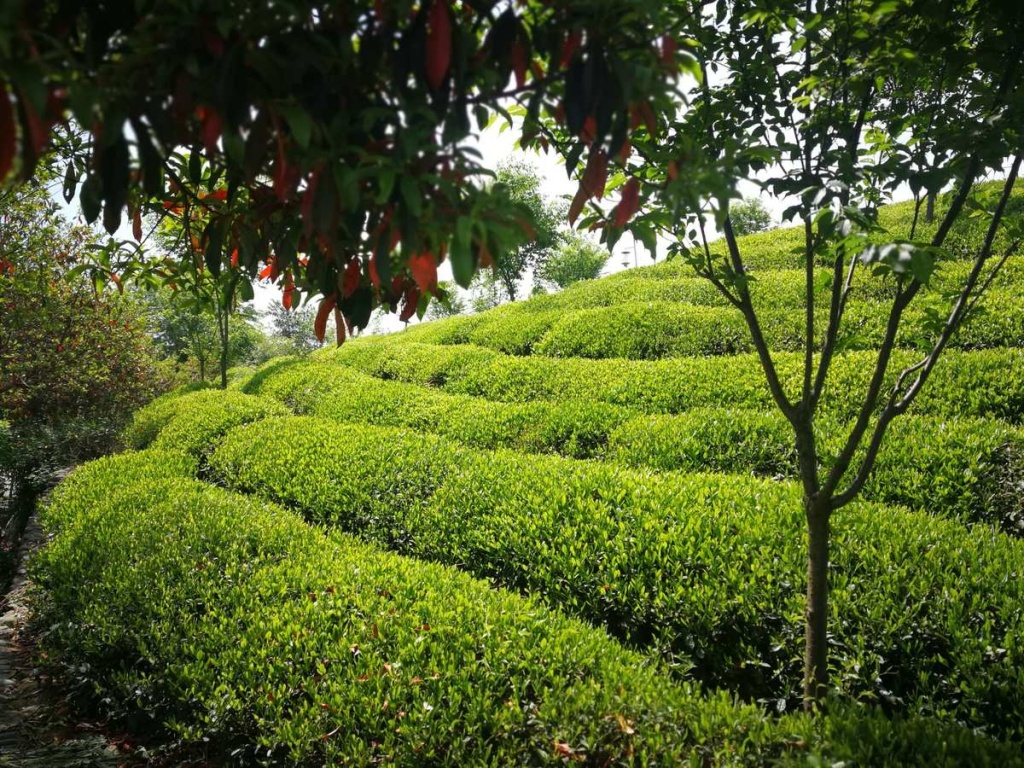
Huangshan Maofeng (Chinese: 黄山毛峰, pinyin: Huángshān máo fēng) (Huangshan Mountain Maofeng Tea) is a famous Chinese green tea that is one of the ten most famous tea varieties in China. It grows in the Huangshan Mountain (Huizhou) region of Anhui Province, which is why it is also called Huizhou tea.
Every year, during the period between Qingming and Guyu (清明 (Qingming): April 5, "Clear Days"; 谷雨 (Guyu): April 20, "Bread Rains"), the first blooming thick and juicy buds of high-quality tea bushes of the "Huangshanzhong" and "Huangshandaizhong" varieties are picked, which are then hand-roasted. The finished tea has a slightly twisted shape, similar to a bird's tongue, a greenish-yellow color, covered with silvery hairs and has golden leaves (the so-called "golden flakes"). When brewed, thick steam is formed in the cup, the infusion has a clear greenish-yellow color, the tea leaves are yellowish-green and full of life, the taste is soft and sweet, the aroma is reminiscent of lily of the valley, and the aftertaste is long and pleasant. Because the freshly brewed tea is covered with white hairs, the bud tips are sharp like peaks, and the fresh leaves are picked from the high peaks of Mount Huangshan, this tea is called Huangshan Maofeng.
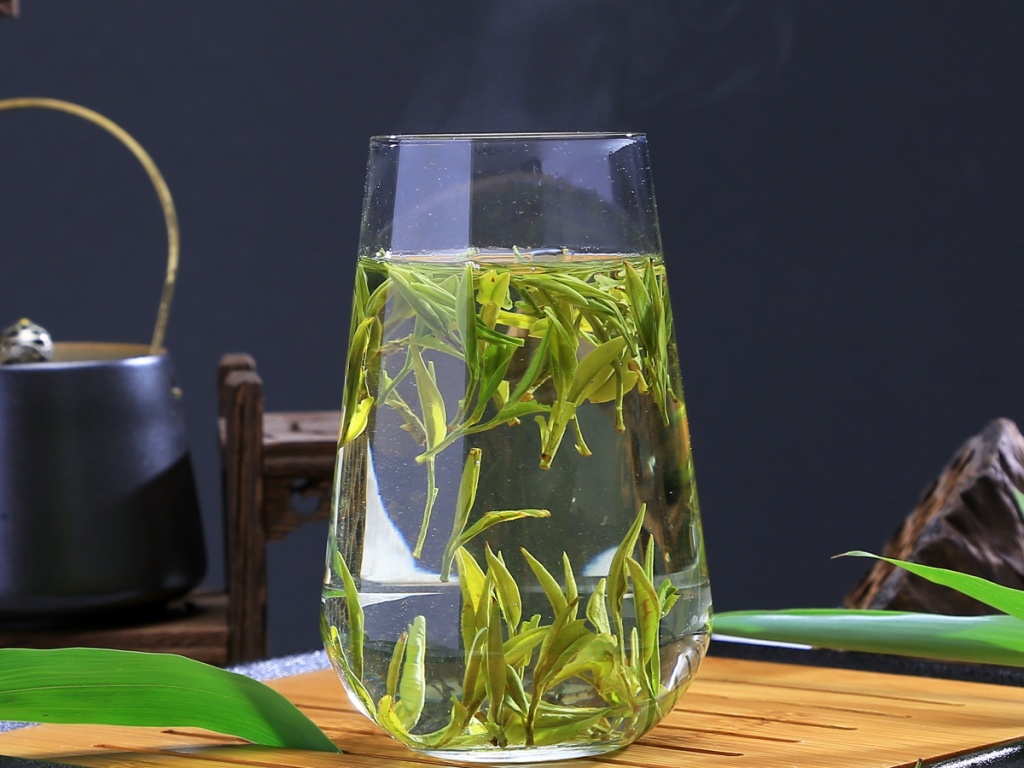
Key points in the history of tea:
- Ancient Roots: Although the exact date of Huangshan Maofeng's origin is unknown, Huangshan Mountain tea is mentioned in ancient Chinese texts dating back to the 11th century, often referred to as "Yellow Mountain Moist Mist."
- Modern name: The tea received its current name at the end of the 19th century, during the reign of Emperor Guangxu. It was then that tea industrialist He Zhengang from the Xia Yuda tea company popularized this variety, giving it a more sonorous and memorable name.
- Why Maofeng? The word "Maofeng" translates as "hairy peaks." The tea got its name due to its characteristic silvery hairs covering young leaves and buds.
- Place of birth: Huangshan Mountain is not just a place where tea grows, but an integral part of it. The unique climate, soil and environment give the tea its unique taste and aroma.
- Highly rated: Maofeng tea quickly gained popularity both in China and abroad. It was valued for its delicate aroma, refreshing taste and health benefits.
Huangshan Maofeng is harvested in the spring, harvested and processed manually, which allows preserving all the beneficial properties of the tea leaf. The tea has a fresh, sweet taste with light fruity notes. The aroma is delicate, with floral shades. Like many green teas, Huangshan Maofeng is rich in antioxidants, vitamins and minerals. It helps improve digestion, boost immunity and reduce stress. Like many famous Chinese teas, Huangshan Maofeng is also associated with an interesting legend.
The Legend of the White Lily
During the reign of Emperor Tianqi of the Ming Dynasty, the new magistrate of Yinxian County, Xiong Kaiyuan, went on a journey through the Huangshan Mountains with his servant and became lost. They were given shelter by an old monk at a local temple. When the monk offered them tea, the magistrate looked at the tea leaves with interest: they were slightly yellowish, shaped like a bird's tongue, and covered with white fluff. After brewing the tea, they saw steam rising from the cup, first making a circle around the rim of the cup, then rising up to a height of about a foot, forming a white lily. The lily slowly rose upward, turning into a cloud, which then dissipated into many thin streams of steam, filling the room with a delicate fragrance.
Upon learning that the tea was called Huangshan Maofeng, the magistrate asked the monk for some tea and mountain water. Returning to the county, the magistrate demonstrated this miracle of tea drinking to his old friend, the magistrate of Taiping County. He was so amazed that he decided to present the tea to the emperor, hoping to receive a reward. However, at the palace, the tea party did not bring the expected effect, and the emperor became angry. The magistrate of Taiping admitted that the tea was obtained from the magistrate Xiong Kaiyuan. The emperor ordered Xiong Kaiyuan to be brought to the palace. He explained that in order for the white lily to appear, it was necessary to brew tea with mountain water. Having received permission to return to Huangshan, the magistrate brought water from a mountain spring. At the palace, the tea party was a success, and the emperor, delighted with what he saw, appointed Xiong Kaiyuan governor of Jiangnan Province. However, Xiong Kaiyuan, thinking that even such a noble drink as Huangshan Maofeng requires special conditions to reveal its qualities, decided to leave the secular life and became a monk at the Yungu Temple, located at the foot of Huangshan. It is said that the tomb of this monk, who took the name Zhengzhi, is located not far from the temple.
The main points of the legend about tea:
The Legend of Chinese Huangshan Maofeng Tea and Emperor Tianqi is a wonderful example of how history and myth intertwine to create a fascinating and romantic tale of the origins of one of China's most famous teas.
- Imperial Connection: The connection of tea's history with the Chinese emperor gives it a special status and prestige. This emphasizes its high quality and makes it a desirable drink for the nobility.
- Poetic component: The image of a white lily appearing on the surface of the tea adds poetry and mysticism to the legend.
- Tea Promotion: The legend helps popularize Huangshan Maofeng tea, making it recognizable and attractive to a wider audience.
- Creating a cultural heritage: This legend has become part of China's cultural heritage and is passed down from generation to generation.
Many historians consider this legend about the demonstration of a white lily to the emperor when brewing Huangshan Maofeng to be more of a beautiful fairy tale than a historical fact. Although the effect of the formation of thick greenish-yellow steam when brewing this tea does take place. Who knows, perhaps for the full effect of the appearance of a white lily to manifest, the same spring mountain water from the foot of Huangshan is needed. One way or another, the legend of Huangshan Maofeng and Emperor Tianqi performs several important functions: it combines history and myth and creates an emotional connection between tea and its consumer and creates a unique image of the product. Thanks to the legend, tea acquires its unique charm and becomes more attractive. The legend also contributes to the development of tea culture, enriches the tea culture of China and makes it more interesting.
The Legend of the White Lily and Huangshan Maofeng Tea is a great example of how history and myth can interact to create fascinating and memorable stories. Although the historical accuracy of some details may be questionable, this legend certainly plays an important role in popularizing this Chinese tea and preserving its cultural heritage.