


Today, every tea lover has heard of such a variety as pu-erh. This is an incredibly tasty, healthy drink that has received high praise from experts and admirers. The best pu-erh grows in China. Here, not only does each region have its own characteristics, but also each village produces an exceptional and original product. Among the highland settlements, Mount Bindao must be mentioned.
Geographical and climatic conditions of Bindao
Mount Bindao is located in Yunnan Province, a highland, most beautiful province in China. There are two villages here, one of which is called Mount Bindao, and the other is called Gunnong. The villagers specialize in picking tea leaves, drying them, and preparing the famous tea.
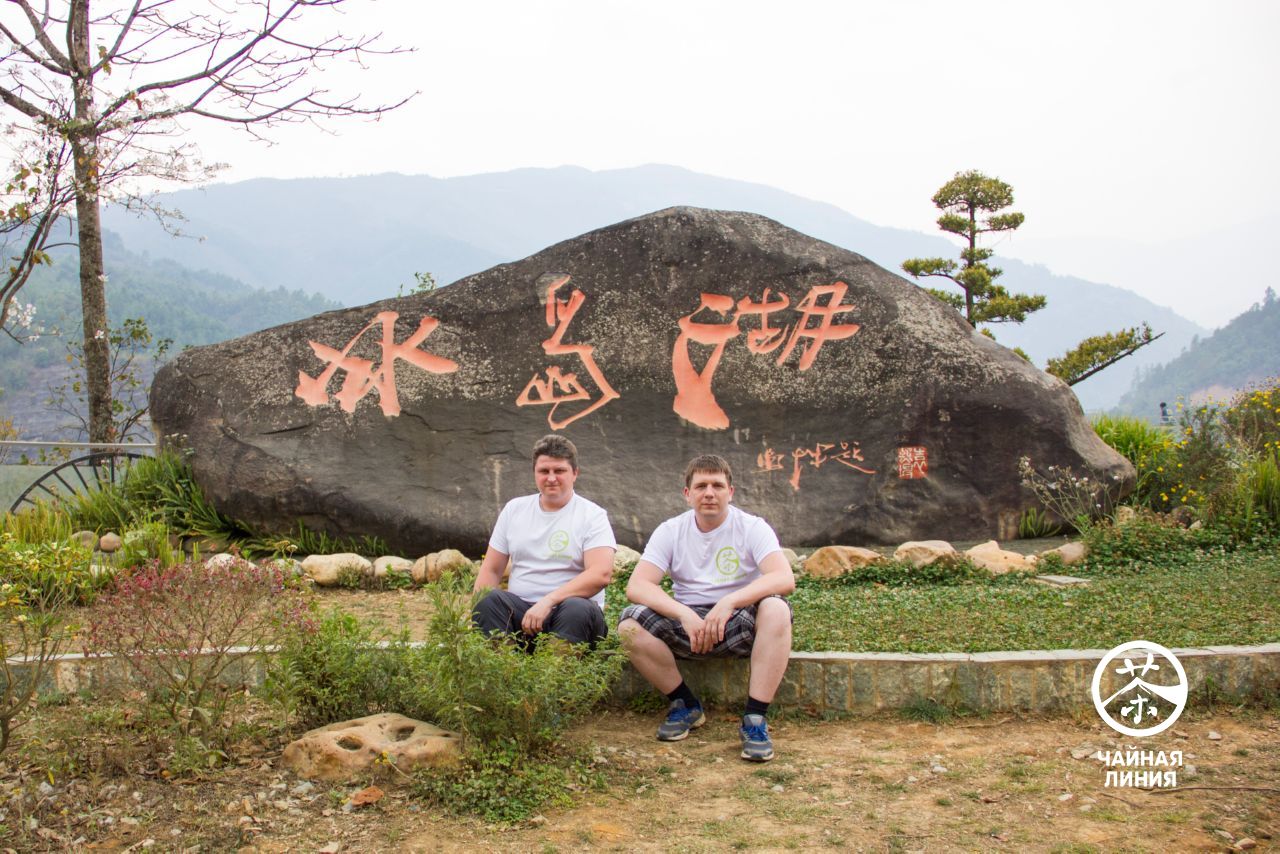


Near Mount Bindao, there are famous geographical locations such as Lincang County and Mengku City, which have the highest number of old tea trees, hundreds of years old.
The height of the mountain peaks reaches 1500-3200 meters above sea level, and all the mountain slopes are covered with gardens of wild and planted trees. Directly on Mount Bindao, tea is collected at a level of up to 2300 meters.
The climatic features of the mountainous area are that during the day the entire area warms up well and cools down sharply in the evening, but the temperature remains within positive limits all year round, even in winter it does not fall below +10°C.


People living in the mountains of Bindao
It is very difficult for us to accept this, but China is a multinational country, with almost 60 different nationalities living in it. And each of them has its own history, traditions and culture.
Many ethnic groups live in Yunnan Province, the most beautiful part of China, where they grow the famous tea and other exotic crops that grow only in tropical and subtropical climates.
The main peoples who live in the Bindao Mountains and other areas of the province are:
- The Dai are the most numerous and ancient people of the group of Thai peoples, whose number exceeds one million people. They live not only in China, but also in neighboring Thailand, Burma, Laos;
- The Lahu belong to the Tibeto-Burman group of peoples and number almost 500 thousand people;
- The Wa are representatives of the Mon-Khmer peoples, numbering about 400 thousand people;
- Bulan, who are part of the Mon-Khmer people. A little over a thousand people live here.
It is believed that the Wa and Bulan people were the first to cultivate tea trees several hundred years ago.
Due to the fact that the region is numerically dominated by the Dai people, for whom Yunnan Province is a place of compact residence, their traditions and cultural values are recognized as fundamental and are popular among local residents and tourists.
Optimal conditions for growing tea
Experts say that to obtain perfect tea, several mandatory conditions are necessary:
- climate close to subtropical, but without heat and with moderate rainfall;
- the soil is fertile and loose, well-saturated with water, but does not retain excess water;
- altitude relative to sea level is, on the one hand, considered a depressing factor, but on the other hand, it increases the desire of plants to survive and promotes their active vegetation;
- the presence of tea plants growing in the wild, which confirms favorable factors for tea culture.
All these factors are present in the mountainous part of Yunnan Province in general and on Mount Bin Dao in particular.
Tea trees on Mount Bindao
Bindao Village is located high in the mountains, and tea trees grow freely in the surrounding area and closer to the top.
Here, mainly representatives of the Qiao Mu agrotype grow, which translates as a tree-like form of tea trees, such as:
- Da Chan Cha
- Da Bao Cha.
These are tall trees, reaching a height of 10-12 meters, the leaves of which have thin skin, an oblong-elliptical shape with a serrated edge. The size of the leaf can reach 12 cm in length, but young leaves that have not reached such parameters are collected. Da Bao Cha is distinguished by the fact that it has small hairs on the stem, and the leaf is softer and more tender than Da Chan Cha.
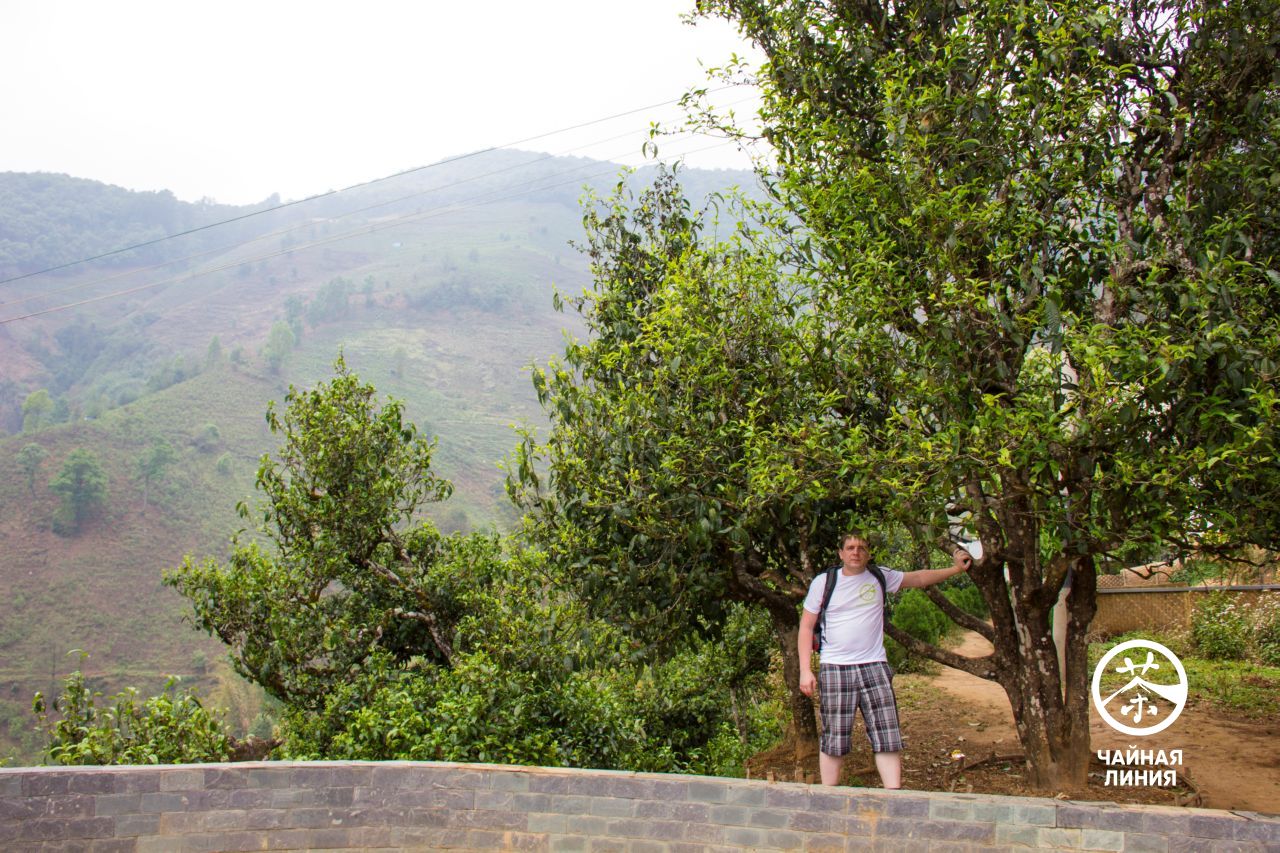


During the picking season, villagers go out every day to collect tea leaves. Since they have to be picked not from low bushes, but from tall trees, this requires special skill. To get a leaf from a height of 5-12 meters, you need to climb the tree.
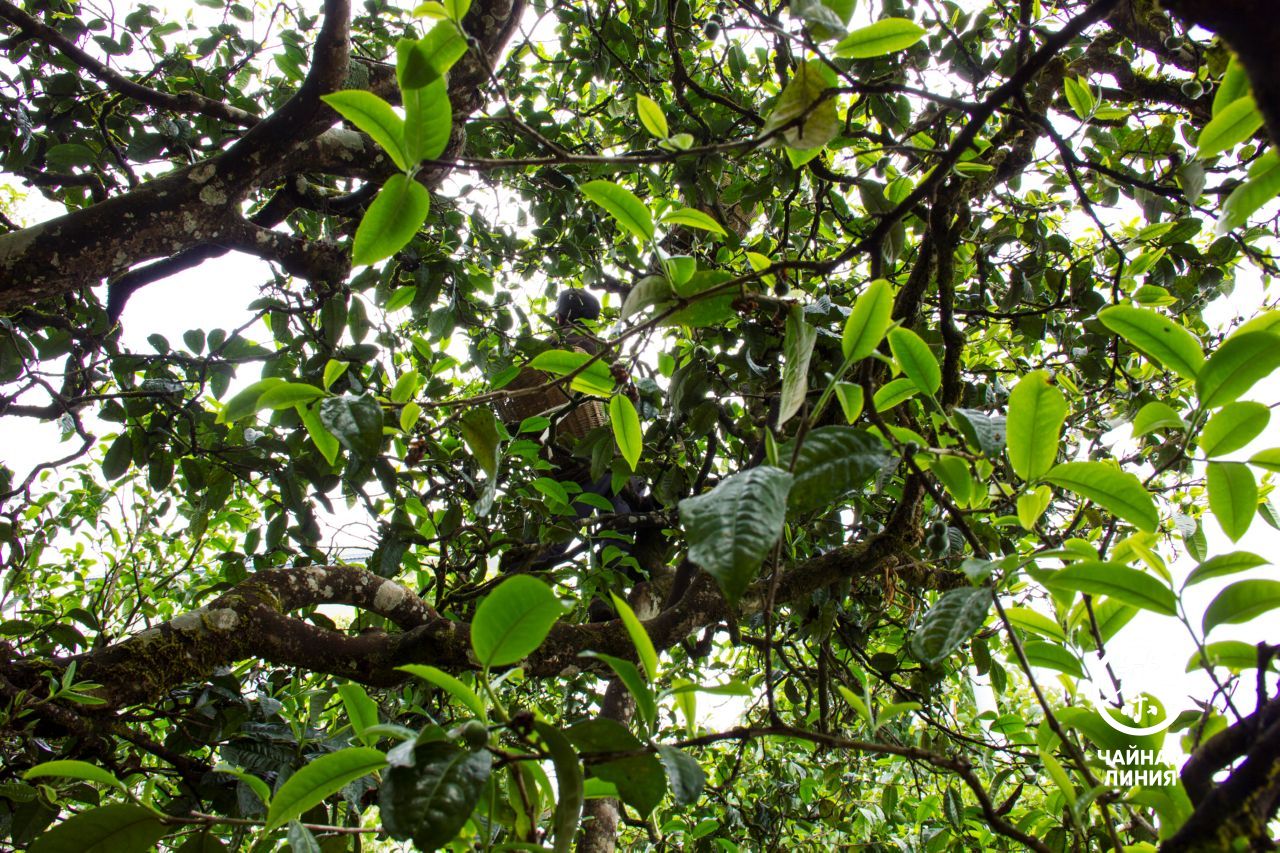
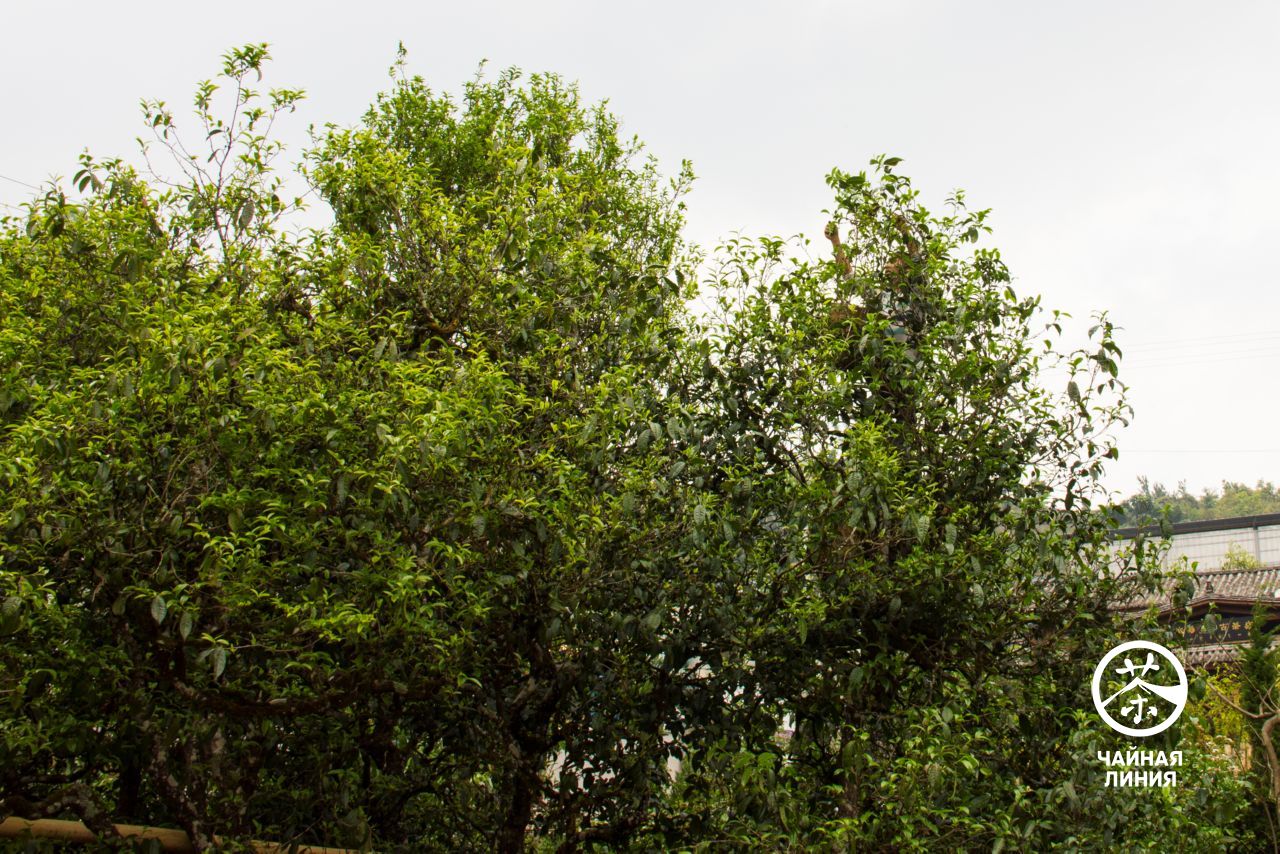
There is a special technology for this. In order not to break branches, poles are placed at an angle to the tree, and the pickers, standing on these swinging and bending poles, pluck the top 3 leaves on each branch. Other leaves are not subject to collection. It is necessary to observe a fine line in order to collect the number of leaves that will not harm the vegetation of the plant.
For this purpose, each tea tree has a sign with the owner's name and phone number, i.e. no one can arbitrarily collect tea leaves or violate the technology of collection. Each of the residents working in this area is responsible for the quality of the product and can show from which tree the leaf was collected.
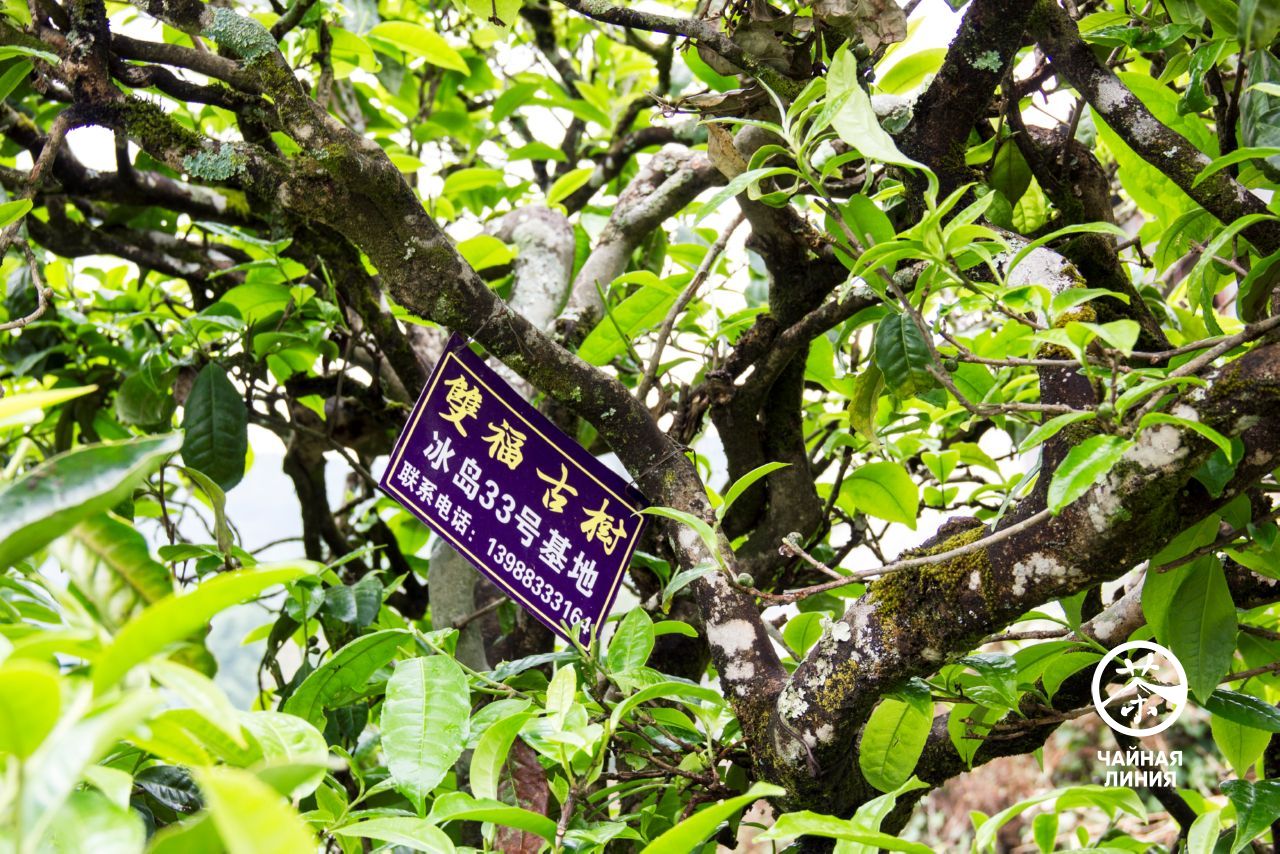
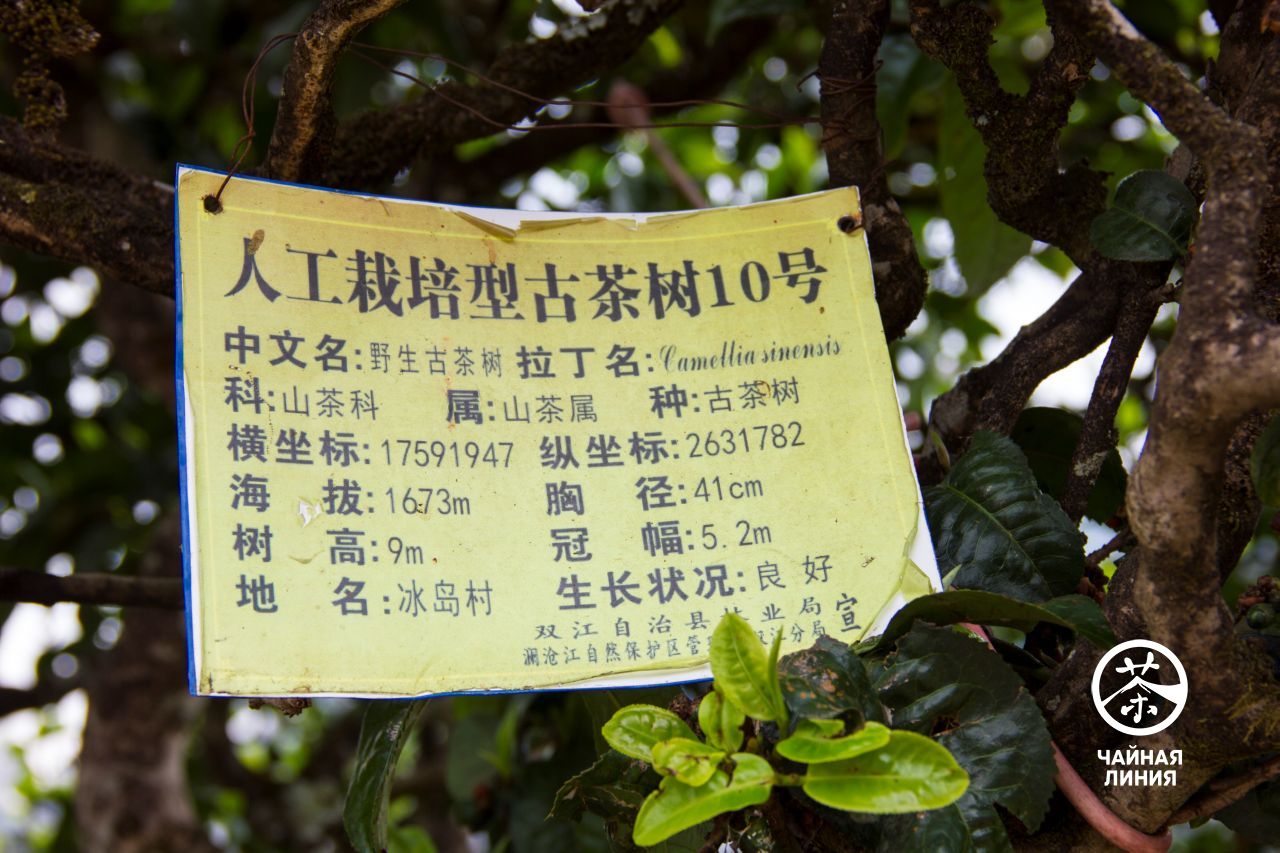
Each plant is treated with care, but no agricultural work is done with them. The tea trees on Mount Bin Dao receive only the nutrients and moisture that the nature of this blessed corner of the earth gives them. It is difficult to determine the exact age of each tree, but the main plantings were made in the 17th century, when the Chinese government began to encourage tea production. Therefore, two- and three-hundred-year-old trees are not uncommon here.
Bingdao tea leaf is an amazing product created by nature itself.